

In industrial production environments, hydraulic power units are critical components that directly determine machine performance and operational efficiency. These systems, which convert pressurised fluid power into mechanical motion, are used across a wide range of applications, from press machines to conveyor systems and from CNC machine tools to metal forming equipment. In this guide, we will comprehensively cover everything from the working principles of industrial hydraulic power units to selection criteria, from maintenance procedures to energy efficiency strategies.
What Is an Industrial Hydraulic Power Unit?
A hydraulic power unit (HPU) is an integrated system that houses the hydraulic pump, hydraulic tank, filters, valves and control elements driven by an electric motor or diesel engine. Its primary function is to pressurise the hydraulic fluid and deliver it to the system at the required flow rate and pressure. This working principle, based on Pascal's law, makes it possible to move large loads by applying a small force.
In industrial facilities, HPUs serve as centralised power sources that meet the hydraulic requirements of machines on the production line. A properly designed HPU extends the machine's service life while minimising energy consumption and preventing unexpected downtime. Industrial chain assembly just as in this process, expertise and precision are equally critical in hydraulic power unit installation.
Key Components of Hydraulic Power Units
Hydraulic Pump and Motor Systems
The hydraulic pump is the heart of the HPU. Among the pump types that supply pressurised fluid to the system, gear pumps, vane pumps and piston pumps are the most widely used options. Gear pumps are preferred for low-pressure applications due to their simple design and cost-effectiveness, while piston pumps are indispensable in industrial presses and metalworking machines that require high pressure. Vane pumps, on the other hand, provide efficient operation in the medium-pressure range and are frequently used in hydraulic presses and injection moulding machines.
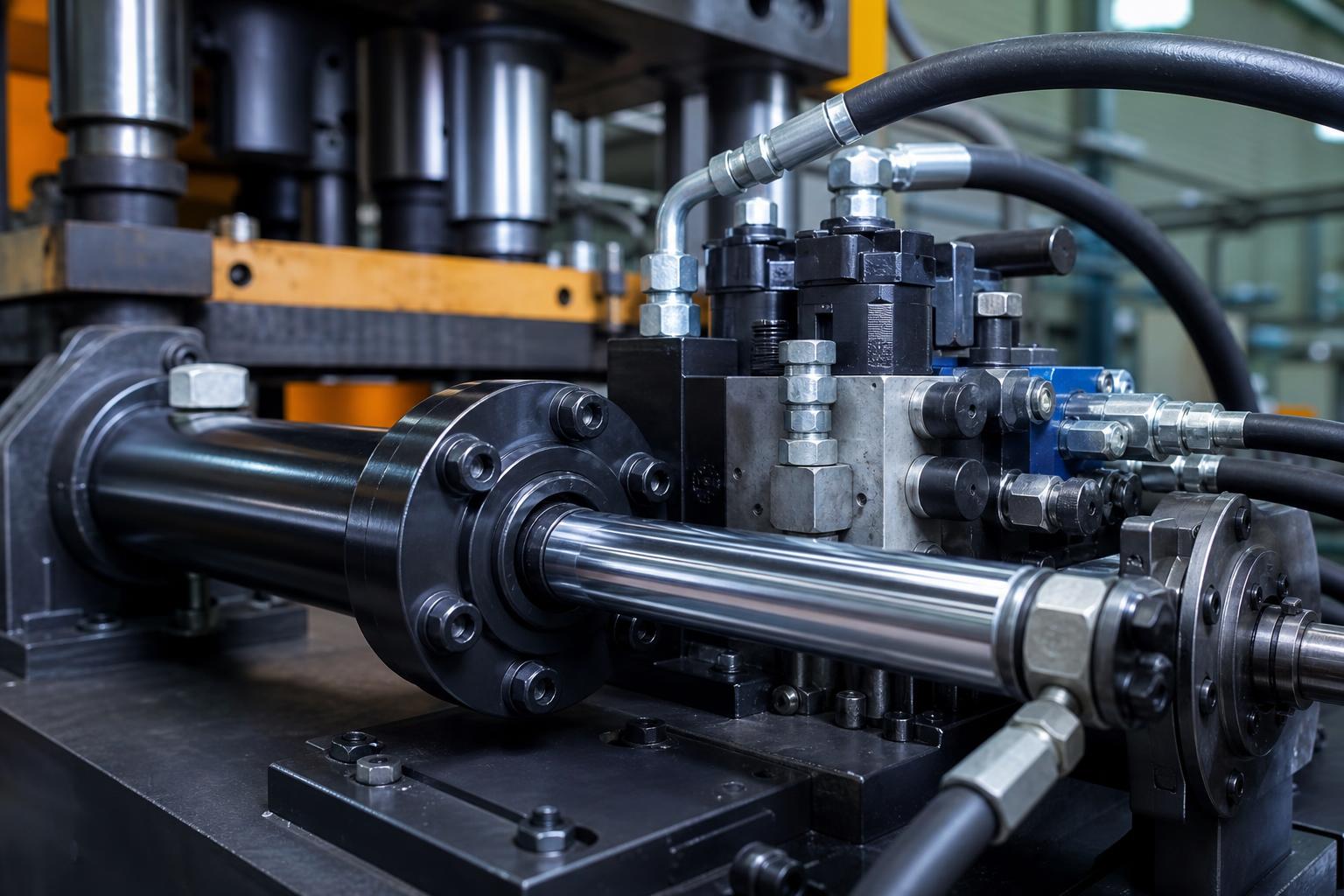
Flow rate, pressure, viscosity and operating temperature parameters play a decisive role in pump selection. Choosing the wrong pump can lead to both energy waste and premature failures. In chain and gear material selection as is the case there, a detailed analysis of application conditions is equally essential in hydraulic pump selection.
Hydraulic Tank and Cooling Systems
The hydraulic tank is the reservoir in which the fluid is stored and cooled. Tank capacity should be at least 3 times the pump flow rate; this ratio is necessary to allow the fluid to cool sufficiently and for air bubbles to separate out. In industrial applications, tank design should include internal pressure resistance, a fluid level indicator, a breather pipe and drain connections.
The cooling system keeps the operating temperature of the hydraulic fluid within the optimal range. While air-cooled heat exchangers are sufficient for small and medium-capacity systems, water-cooled exchangers are preferred in large industrial facilities. If the fluid temperature rises above 60°C, it can cause a drop in viscosity, seal deterioration and pump cavitation.
Filters and Fluid Control Components
The most critical component determining the service life of a hydraulic system is the filter. There are three main filtration points: the suction filter, the pressure line filter and the return line filter. Fluid, whose cleanliness level is determined according to ISO 4406 standards, must be continuously filtered against particle contamination. While a filtration precision of 10 microns is sufficient for standard industrial applications, precision systems with servo valves may require filtration below 3 microns.
Hydraulic Power Unit Selection Criteria
Determining Pressure and Flow Rate Requirements
The first step in HPU selection is determining the system's maximum operating pressure and the required flow rate. Pressure is determined by calculating the maximum load the machine will carry and the cylinder/piston area. Taking the safety factor into account, the HPU's rated pressure should be at least 25% above the system requirement. Flow rate is calculated on the basis of cylinder volume and cycle time; in systems where multiple actuators operate simultaneously, peak flow requirements can be met with an accumulator.
Operating Environment and Fluid Compatibility
Industrial environmental conditions directly affect HPU design. Factors such as high temperature, dusty environments, humidity and vibration determine component selection and protective measures. Specific conditions such as the requirement for food-grade fluid in food production facilities, the need for ATEX-certified equipment in mines, and the need for corrosion-resistant materials in marine environments shape the HPU specification.
The Importance of Viscosity in Fluid Selection
Hydraulic fluid viscosity is a decisive parameter for pump efficiency and system performance. Low viscosity increases internal leakage, while high viscosity causes suction losses and cavitation. Selecting a fluid with a viscosity index suited to the operating temperature range is as critical as fluid selection in chain lubrication systems . HM or HLP type fluids compliant with DIN 51524 can be used safely in most industrial applications.
Energy Efficiency and Sustainability
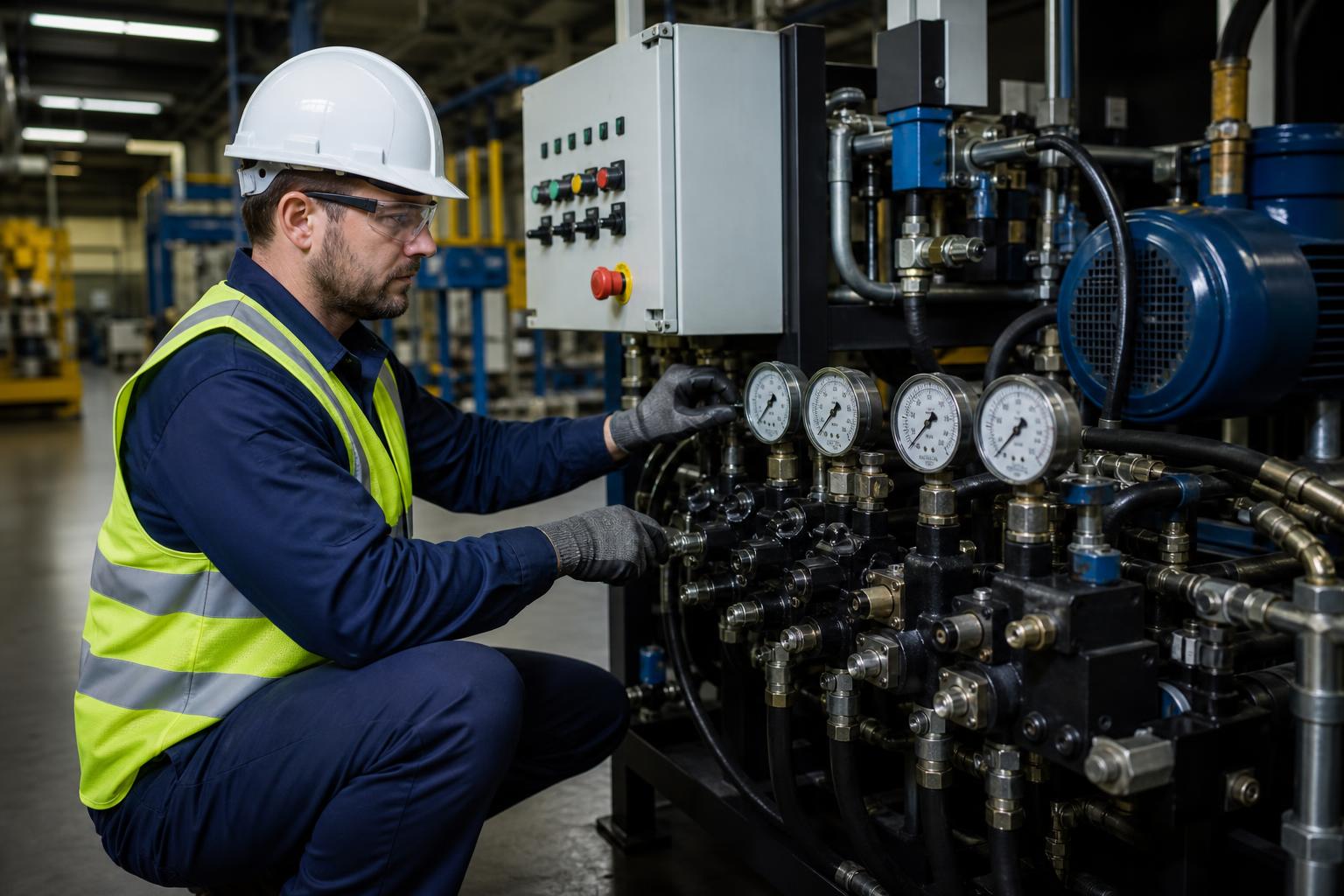
In industrial hydraulic systems, energy efficiency directly determines both operational costs and environmental impact. Variable-displacement piston pumps can deliver 30-50% energy savings compared with fixed-displacement pumps. In medium- and high-pressure applications, load-sensing pump technology minimises idle-running losses by adjusting the flow and pressure the system needs in real time.
Energy Savings with Variable-Displacement Pumps
Fixed-displacement pumps provide continuous flow even when the system has no fluid demand, with the excess pressure wasted through the relief valve. This causes significant energy waste, particularly in press and mould-change operations with long standby periods. With variable-displacement pumps, the pump stroke angle is adjusted to demand, so only the required flow is produced. Annual energy savings on a 75 kW system can range between 15,000-25,000 TL, an amount that pays back the investment cost within 1-2 years.
Accumulator Use and Peak Load Management
Hydraulic accumulators are used to meet peak flow rate requirements and to enable energy recovery. Gas-charged bladder accumulators are the most common type in industrial applications, providing instantaneous power support to the system. The peak load generated at the moment of impact in press machines can be absorbed by the accumulator, making it possible to reduce pump size and lower energy consumption. In addition, the accumulator also functions as an emergency power source, working together with a safety valve and a low-pressure switch to ensure the safe shutdown of the critical system.
Maintenance and Failure Prevention Strategies
Creating a Periodic Maintenance Schedule
In hydraulic power units, proactive maintenance is the most important preventer of unplanned downtime. A maintenance schedule structured into daily, weekly, monthly and annual periods maximises the reliability of the system. Daily checks cover fluid level, temperature and pressure gauge readings, while weekly checks include filter indicator inspection and external leak checks. In monthly maintenance, a fluid sample should be taken and ISO 4406 particle counting and viscosity analysis should be carried out.
Fluid Analysis and Condition Monitoring
Condition-based maintenance optimises maintenance scheduling by using sensor data and fluid analysis results. Parameters such as particle count, water content, viscosity, acid number and element analysis (iron, copper, lead, chromium) are tracked as trends, allowing component wear to be detected early. For example, a sudden increase in iron particles points to pump or cylinder wear, while a rise in copper may indicate bearing degradation. Bosch Rexroth hydraulic solutions and other expert resources offer comprehensive guides for implementing condition monitoring technologies.
Common Causes of Failure and Solutions
70-80% of hydraulic system failures stem from fluid contamination. Particle contamination causes erosion on pump and valve surfaces, increasing internal leakage and leading to performance loss. Water ingress, on the other hand, reduces the lubricating properties of the fluid, triggers cavitation and accelerates corrosion. For this reason, as in chain and gear failure analysis root cause identification methodology should also be applied systematically in hydraulic systems.
Common Failure Table
- Pump noise: Cavitation, suction line blockage or low fluid level → Clean the suction filter and check the fluid level
- High temperature: Insufficient cooling, excessive pressure or continuous relief valve opening → Check the cooling system and adjust the pressure
- Slow movement: Internal leakage, worn cylinder seal or low fluid viscosity → Seal replacement and fluid check
- System pressure drop: Relief valve failure, pump wear or air ingress → Valve adjustment and pump testing
- Fluid foaming: Air intake leaks, incorrect fluid type or low fluid level → Suction line seal check
Safety Standards and Compliance Requirements
Compliance with international safety standards is mandatory in the design and manufacture of industrial hydraulic systems. ISO 4413 (Hydraulic Fluid Power – General Rules), CE directives and machinery safety regulations guarantee the safe operation of the system. Safety components such as pressure relief valves, emergency stop systems, overflow protection and fluid leak protection are an integral part of HPU design. Parker Hydraulics and other global manufacturers’ technical documentation provide valuable resources for applying safety design principles.
Risk Assessment and Operator Training
Hydraulic systems carry serious safety risks due to high pressure. Fluid spraying from a 1 mm² hole in a 200 bar system can pierce the skin and cause tissue damage. For this reason, risk assessment, periodic inspection and operator training are fundamental links in the safety chain. Operators must be regularly trained in emergency stop procedures, pressurised fluid safety and first-response techniques.
HPU Applications by Industrial Sector
Automotive and Metal Processing
The automotive industry is one of the sectors where hydraulic power units are used most intensively. Press machines, die-change systems, robotic welding grippers and lifting platforms all run on HPUs. In the metal processing sector, CNC machine tools, hydraulic band saws and bending machines require high-pressure HPUs. In both sectors, precise pressure control, low vibration and high reliability are the priority design criteria.
Food and Pharmaceutical Industry
In food and pharmaceutical production facilities, hydraulic systems must be designed to meet hygiene standards. This calls for food-grade fluid (H1, H2 certified), stainless steel tank and pipe fittings, an easy-to-clean surface design, and minimisation of oil leakage risk. EHEDG (European Hygienic Engineering Design Group) guidelines govern HPU design in areas with potential food contact.
Future Trends and Digitalisation
The Industry 4.0 transformation is also having a profound impact on hydraulic power units. Real-time monitoring via IoT sensors, AI-driven fault prediction and digital twin technologies are ushering in a new era in HPU management. Cloud-based monitoring platforms track parameters such as temperature, pressure, flow rate and particle count around the clock, giving early warning before a failure occurs. These technologies have the potential to reduce unplanned downtime by 40-60%.
Electro-Hydraulic and Hybrid Systems
Traditional hydraulic systems are gradually giving way to electro-hydraulic actuators and hybrid solutions. Hydraulic pump drives with servo electric motors increase energy efficiency by up to 50%, while also significantly improving precision and control. Independent Variable Valve Technology (IVT) eliminates energy waste by providing a separate pump output for each actuator. These advances are fundamentally reshaping the design philosophy of industrial machinery in line with sustainable production goals.
Conclusion
Industrial hydraulic power units are the invisible yet indispensable force behind modern manufacturing. Selecting the right components, professional installation, regular maintenance and the integration of digital monitoring technologies are the keys to getting maximum value from an HPU investment. Variable-flow pump technologies and IoT-based condition monitoring systems strengthen the competitiveness of industrial facilities by improving both energy efficiency and operational reliability. At Gurur Makina, we offer our customers technical consultancy and solutions across a wide range, from industrial chain and gear systems to hydraulic power units.