
OVERVIEW
Gears
CATALOGUE
You can click the link below to download our general catalogue covering all our products.
Download Catalogue PDFCHAIN SPROCKETS
 You can download the technical document about the product from the link below.
PDF Catalogue
You can download the technical document about the product from the link below.
PDF Catalogue CHAIN TENSIONER
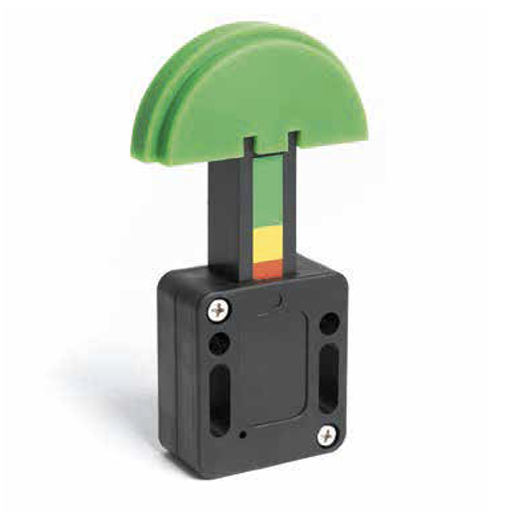 You can download the technical document about the product from the link below.
PDF Catalogue
You can download the technical document about the product from the link below.
PDF Catalogue RACK GEAR
 You can download the technical document about the product from the link below.
PDF Catalogue
You can download the technical document about the product from the link below.
PDF Catalogue Gear Types
- Timing Gear
- Module Gear
- Gear Coupling
- Chain Sprocket
- Mitre Bevel Gear
- Bevel Gear
- Chevron Gear
- Spur Gear
- Helical Gear
- Internal Gear
- Worm Gear
- Rack Gear
- Special Gear
Gears
Gears are among the indispensable parts of chain conveyor systems. Gear models that work in connection with the motor play a vital role in transmitting the motor's rotational power. Featuring a wheel-like design, these models are manufactured from solid metal. Gears enable the chain to move, and the gear model must be chosen to suit the chain type.

A quick note: for gears and more, Türkiye's best chain brand you can get in touch with Gurur Makina.
The protruding structures on the gear form a perfect match with the chain, and the motor's rotational power is transferred first through the gear and then via the chain. While chain sizes and models vary widely, the appropriate gear model for each chain type is always included within the product range.
Gear models are determined, the structure of the chain model and the motor's torque setting are among the decisive factors. Manufactured to precise and careful specifications, gear models play a crucial role as a key power transmission component.
Known as drive gears, these models represent the efficiency of chain-driven systems. Even over long transmission distances, this system and its parts must actively carry out their function, depending on the motor's power.
Gear Models
Gears have long played a central role in the operation of chain-driven systems. Chain models manufactured to the required standard dimensions achieve a perfect match with a gear model of the same size specification. This ensures the motor's power performance results in efficient, reliable power transmission.
Our timing gears, module gears, gear couplings, chain sprockets, mitre bevel gears, bevel gears, chevron gears, spur gears, helical gears, internal gears, worm gears, rack gears and special gears come as options within a wide category in this field. Unlike pulley models, which have a smooth, flat structure, gear models feature teeth that are each part of the system and fit precisely into the chain's gaps, enabling the chain to rotate and power to be transmitted.
Gears are a vital part of the operation of industrial systems. The motor's rotational force directly causes the gears to turn, and as the gears engage with the chain links, the resulting force is transmitted to the chains in conveyors and other machinery, and from there to the system itself. Thanks to the shaft bore in the gears, they are compatible with motors and can be adapted to integrate with the chain, allowing them to fit the system.
Gears And Working Principles
Gears are the component that provides the chain's primary movement, while the dimensions of the gear's diameter affect the speed of the chain's movement. Although gears are manufactured from robust steel material, corrosion and wear occur due to demanding working conditions.
To prevent this, both the gear and the chain need to be lubricated to a certain degree with the correct oil. To eliminate the effects of friction and heating, it is very important to carry out timely and periodic maintenance on the gears.
In some systems, gears have different features and are also used as a component that increases torque power. Rack chain models with different diameter and circumference measurements emerge as a model that is not compatible with chains but is compatible with gear structures. Gears chosen in line with motor power and torque calculations show themselves through their structure, which is compatible with the system they are part of.
Our Gear Products
Our gear models, an important element in power transmission, are among the key examples within our product category. Whether as part of a system or simply as a gear, you can select the options you want from our products. Many companies wish to keep our gear products in stock as spare parts.
With different models and different size options, our products present themselves as choices from a wide category. Thanks to the information we provide about our products and prices, you can gain sufficient knowledge and procure the products you need accordingly.
Our gear models, each robust and each with rust-resistant properties, will prove to be a highly effective and essential component in mechanisms requiring low rotation speeds. Our gear models will provide you with ease when planning high efficiency in conveyors, production lines and process lines. You can obtain all types of model options from us and purchase them on favourable terms.
What Is a Chain Sprocket?
A sprocket is a toothed wheel that transmits or receives rotary motion by engaging with the chain. Its teeth are machined to match the pitch and roller diameter of the mating chain, which is why a sprocket is always selected together with the chain standard. A DIN 8187 (B series) chain will not fit a sprocket machined for DIN 8188 (ASA series).
The service life and quiet running of a sprocket depend on three variables: the correct tooth count, the correct hub type and a tooth profile compatible with the chain.
How Is the Tooth Count Chosen?
The tooth count determines both the transmission ratio and the running characteristics of the chain:
- 17 teeth is the lower limit. With fewer teeth the chain wraps around the sprocket like a polygon (the polygon effect); speed fluctuation and impact loading increase.
- An odd tooth count is preferred. An odd tooth count distributes wear more evenly across the chain links.
- For the large sprocket, 114 teeth is taken as the upper limit. On a larger sprocket, chain elongation leads to rapid climbing on the teeth.
- At high speeds, the tooth count is increased. This reduces both noise and impact.
The pitch circle diameter is calculated from the tooth count and the pitch: d = p / sin(180° / z). Here p is the chain pitch and z is the tooth count. This value is needed to determine whether the sprocket will fit within the machine.
Hub Types: A, B and C
| Type | Structure | Application |
|---|---|---|
| Type A | No hub, flat plate | Bolted to a flange or pulley |
| Type B | Hub on one side | The most common type; fitted to the shaft with a key or bush |
| Type C | Hub on both sides | High-torque connections requiring a long hub |
The hub bore can be left as a raw (pilot) bore or machined to size. A sprocket with a raw hub is machined afterwards to match the shaft diameter, giving flexibility for non-standard shaft sizes. When a taper bush hub is chosen, the same sprocket can be used on different shaft diameters simply by changing the bush. For choosing the connecting element, power transmission components our article is a useful guide.
Sprocket Material and Hardening
- Carbon steel (C45): General purpose. Economical and easy to machine.
- Case-hardening steel: The tooth surface is hardened while the core stays tough. Preferred under high load and impact.
- Induction-hardened teeth: Only the tooth surface is hardened; wear resistance increases markedly.
- Stainless steel: Food, pharmaceutical and wet environments. Wear resistance is lower than carbon steel.
- Plastic (POM, PA): Low-load lines requiring quiet, lubrication-free operation.
The most common mistake in practice is running a hardened chain against a soft sprocket. The sprocket loses its tooth profile within a few hundred hours, and afterwards it rapidly wears out the new chain as well.
Other Gear Types
Rack and pinion
A straight toothed bar that converts rotary motion into linear motion. It works together with a pinion gear. Used in automatic doors, machine tool axes and positioning systems. Module, tooth height and bar length are the determining factors in selection.
Module gear (spur gear)
The classic power transmission gear. Its size is defined by the module (m); the module indicates the tooth size. The module of two gears that mesh must be identical.
Bevel gears and crown wheel & pinion sets
Transmits motion between intersecting axes. Typically used in drives requiring a 90-degree change of direction.
Gear coupling
A coupling component that flexibly joins two shafts using a toothed hub with a chain or sleeve. It tolerates small axial misalignments.
Chain tensioning elements
Spring-loaded or adjustable elements that maintain the chain's operating tension. Required on long centre distances and on lines where the chain sags.
How to Recognise Sprocket Wear
The decision to replace a sprocket is based on the shape of the tooth profile rather than on measurement alone:
- Pointed tooth tips: The tooth takes on a hook-like appearance. This is a sign of advanced wear.
- Hollowing on one side: A hollow forms on the working surface; the chain seats into this hollow and starts to knock.
- Shiny tooth root: This means the chain is climbing up the sprocket; the elongation limit has been exceeded.
- Broken or cracked tooth: Risk of chain jumping and sudden stoppage. Immediate replacement is required.
The chain and sprocket are replaced together. The service life of a new chain fitted to a worn sprocket typically falls by half; likewise, when a new sprocket runs with an old chain, the tooth profile deteriorates rapidly.
What Information Is Needed When Ordering?
- Chain standard and pitch (e.g. 12B-1, pitch 19.05 mm)
- Number of teeth
- Number of strands (simplex, duplex, triplex)
- Hub type (A, B, C) and bore diameter
- Keyway size or taper bush type
- Material and hardening requirement
If you have a sample, the measurements can be taken by us. For non-standard tooth counts and hub dimensions, we manufacture to the sample. For a quote price request form .
Frequently Asked Questions
Which standard is used as the basis when selecting a chain sprocket?
The sprocket is selected according to the standard of the chain it will mesh with. DIN 8187 (B series) and DIN 8188 (ASA series) sprockets cannot be used interchangeably; even with the same pitch, the roller diameter and tooth profile differ.
Why should the number of teeth be odd?
An odd number of teeth ensures the chain links engage different teeth on every revolution. This spreads wear more evenly and extends sprocket life.
What is the minimum number of teeth for the small sprocket?
The generally accepted minimum is 17 teeth. With fewer teeth, the polygon effect increases; the chain wraps around the sprocket like a polygon, raising speed fluctuation and shock loading.
Should the sprocket be replaced at the same time as the chain?
Yes. A new chain fitted to a worn sprocket wears out quickly; likewise, a new sprocket run with a stretched chain rapidly loses its tooth profile.
How is the pitch circle diameter calculated?
It is found using the formula d = p / sin(180° / z), where p is the chain pitch and z is the number of teeth. This value is used to determine whether the sprocket will fit the machine and to establish the centre distance.