

In industrial production environments, hydraulic power units are critical components that directly determine machine performance and operational efficiency. These systems, which convert pressurised fluid power into mechanical motion, are used across a wide range of applications, from press machines to conveyor systems and from CNC machine tools to metal forming equipment. In this guide, we will comprehensively cover everything from the working principles of industrial hydraulic power units to selection criteria, from maintenance procedures to energy efficiency strategies.
What Is an Industrial Hydraulic Power Unit?
A hydraulic power unit (HPU) is an integrated system that houses the hydraulic pump, hydraulic tank, filters, valves and control elements driven by an electric motor or diesel engine. Its primary function is to pressurise the hydraulic fluid and deliver it to the system at the required flow rate and pressure. This working principle, based on Pascal's law, makes it possible to move large loads by applying a small force.
Endüstriyel tesislerde HPU’lar, üretim hattındaki makinelerin hidrolik ihtiyacını karşılayan merkezi güç kaynakları olarak görev yapar. Doğru tasarlanmış bir HPU, makinenin ömrünü uzatırken enerji tüketimini minimize eder ve beklenmedik duruşların önüne geçer. Industrial chain assembly just as in this process, expertise and precision are equally critical in hydraulic power unit installation.
Key Components of Hydraulic Power Units
Hydraulic Pump and Motor Systems
Hidrolik pompa, HPU’nun kalbidir. Sisteme akışkanı basınçlı olarak sağlayan pompa tipleri arasında dişli pompa, kanatçık pompa ve pistonlu pompa en yaygın kullanılan seçeneklerdir. Dişli pompalar basit yapıları ve uygun maliyetleriyle düşük basınç uygulamalarında tercih edilirken, pistonlu pompalar yüksek basınç gerektiren endüstriyel pres ve metal işleme makinelerinde vazgeçilmezdir. Kanatçık pompalar ise orta basınç aralığında verimli çalışma sağlayarak hidrolik pres ve enjeksiyon makinelerinde sıklıkla kullanılmaktadır.
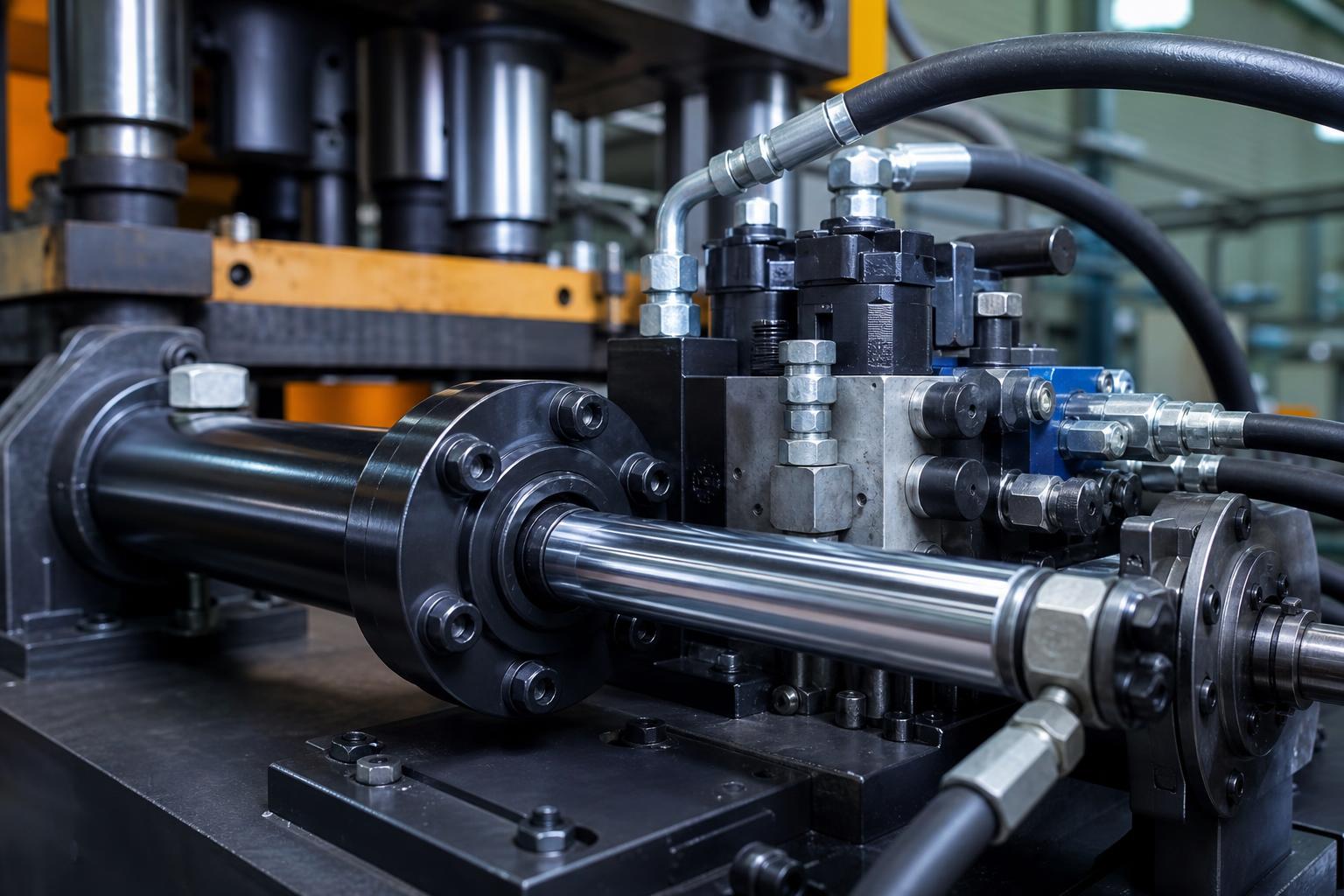
Flow rate, pressure, viscosity and operating temperature parameters play a decisive role in pump selection. Choosing the wrong pump can lead to both energy waste and premature failures. In chain and gear material selection as is the case there, a detailed analysis of application conditions is equally essential in hydraulic pump selection.
Hydraulic Tank and Cooling Systems
The hydraulic tank is the reservoir in which the fluid is stored and cooled. Tank capacity should be at least 3 times the pump flow rate; this ratio is necessary to allow the fluid to cool sufficiently and for air bubbles to separate out. In industrial applications, tank design should include internal pressure resistance, a fluid level indicator, a breather pipe and drain connections.
Soğutma sistemi, hidrolik akışkanın çalışma sıcaklığını optimal aralıkta tutar. Hava soğutmalı ısı eşanjörleri küçük ve orta kapasiteli sistemler için yeterliyken, büyük endüstriyel tesislerde su soğutmalı eşanjörler tercih edilir. Akışkan sıcaklığının 60°C’nin üzerine çıkması, viskozite düşüşüne, conta bozulmalarına ve pompa kavitasyonuna neden olabilir.
Filters and Fluid Control Components
The most critical component determining the service life of a hydraulic system is the filter. There are three main filtration points: the suction filter, the pressure line filter and the return line filter. Fluid, whose cleanliness level is determined according to ISO 4406 standards, must be continuously filtered against particle contamination. While a filtration precision of 10 microns is sufficient for standard industrial applications, precision systems with servo valves may require filtration below 3 microns.
Hydraulic Power Unit Selection Criteria
Determining Pressure and Flow Rate Requirements
HPU seçiminde ilk adım, sistemin maksimum çalışma basıncı ve gereksinim duyulan debi miktarının belirlenmesidir. Basınç değeri, makinenin taşıyacağı maksimum yük ve silindir/piston alanı hesaplanarak tespit edilir. Güvenlik faktörü dikkate alınarak, HPU’nun nominal basıncı sistem gereksiniminin en az %25 üzerinde olmalıdır. Debi ise silindir hacmi ve çevrim süresi baz alınarak hesaplanır; birden fazla aktüatörün eşzamanlı çalıştığı sistemlerde pik debi gereksinimi akümülatör ile karşılanabilir.
Operating Environment and Fluid Compatibility
Industrial environmental conditions directly affect HPU design. Factors such as high temperature, dusty environments, humidity and vibration determine component selection and protective measures. Specific conditions such as the requirement for food-grade fluid in food production facilities, the need for ATEX-certified equipment in mines, and the need for corrosion-resistant materials in marine environments shape the HPU specification.
The Importance of Viscosity in Fluid Selection
Hydraulic fluid viscosity is a decisive parameter for pump efficiency and system performance. Low viscosity increases internal leakage, while high viscosity causes suction losses and cavitation. Selecting a fluid with a viscosity index suited to the operating temperature range is as critical as fluid selection in chain lubrication systems . HM or HLP type fluids compliant with DIN 51524 can be used safely in most industrial applications.
Energy Efficiency and Sustainability
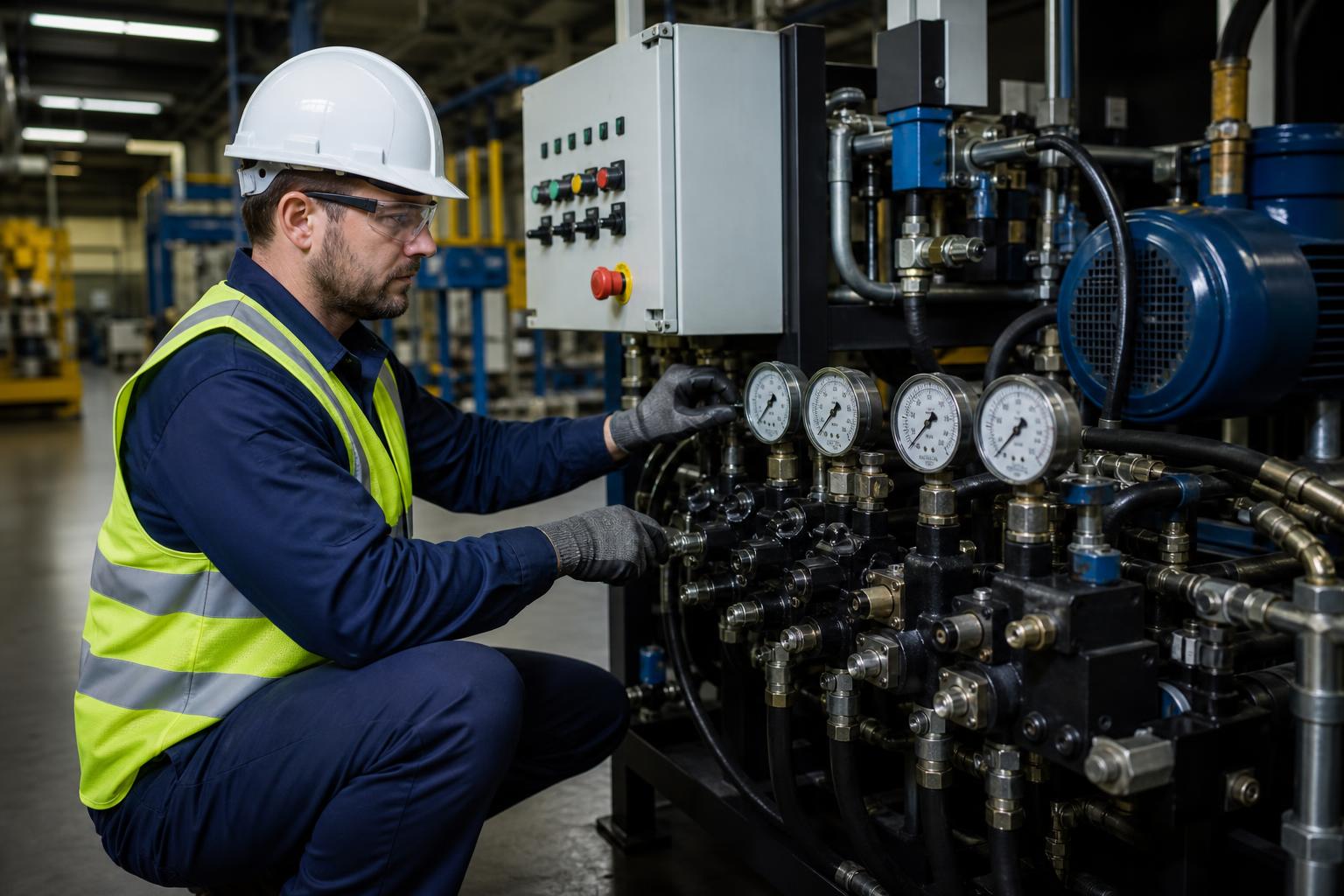
In industrial hydraulic systems, energy efficiency directly determines both operational costs and environmental impact. Variable-displacement piston pumps can deliver 30-50% energy savings compared with fixed-displacement pumps. In medium- and high-pressure applications, load-sensing pump technology minimises idle-running losses by adjusting the flow and pressure the system needs in real time.
Energy Savings with Variable-Displacement Pumps
Sabit debili pompalar, sistemin akışkan gereksinimi olmasa bile sürekli akış sağlar ve fazla basınç relief valfi üzerinden boşa gider. Bu durum, özellikle bekleme sürelerinin uzun olduğu pres ve kalıp değiştirme operasyonlarında ciddi enerji israfına yol açar. Değişken debili pompalarda ise pompa strok açısı talebe göre ayarlanarak sadece gerekli debi üretilir. Yıllık enerji tasarrufu, 75 kW’lık bir sistemde 15.000-25.000 TL arasında değişebilir; bu tutar yatırım maliyetini 1-2 yıl içinde amorti eder.
Accumulator Use and Peak Load Management
Hydraulic accumulators are used to meet peak flow rate requirements and to enable energy recovery. Gas-charged bladder accumulators are the most common type in industrial applications, providing instantaneous power support to the system. The peak load generated at the moment of impact in press machines can be absorbed by the accumulator, making it possible to reduce pump size and lower energy consumption. In addition, the accumulator also functions as an emergency power source, working together with a safety valve and a low-pressure switch to ensure the safe shutdown of the critical system.
Maintenance and Failure Prevention Strategies
Creating a Periodic Maintenance Schedule
In hydraulic power units, proactive maintenance is the most important preventer of unplanned downtime. A maintenance schedule structured into daily, weekly, monthly and annual periods maximises the reliability of the system. Daily checks cover fluid level, temperature and pressure gauge readings, while weekly checks include filter indicator inspection and external leak checks. In monthly maintenance, a fluid sample should be taken and ISO 4406 particle counting and viscosity analysis should be carried out.
Fluid Analysis and Condition Monitoring
Condition-based maintenance optimises maintenance scheduling by using sensor data and fluid analysis results. Parameters such as particle count, water content, viscosity, acid number and element analysis (iron, copper, lead, chromium) are tracked as trends, allowing component wear to be detected early. For example, a sudden increase in iron particles points to pump or cylinder wear, while a rise in copper may indicate bearing degradation. Bosch Rexroth hydraulic solutions and other expert resources offer comprehensive guides for implementing condition monitoring technologies.
Common Causes of Failure and Solutions
Hidrolik sistem arızalarının %70-80’i akışkan kontaminasyonundan kaynaklanır. Partikül kirliliği, pompa ve valf yüzeylerinde erozyon oluşturarak iç kaçakları artırır ve performans kaybına yol açar. Su bulaşması ise akışkanın yağlayıcı özelliğini azaltır, kavitasyonu tetikler ve korozyonu hızlandırır. Bu nedenle, as in chain and gear failure analysis root cause identification methodology should also be applied systematically in hydraulic systems.
Common Failure Table
- Pump noise: Cavitation, suction line blockage or low fluid level → Clean the suction filter and check the fluid level
- High temperature: Insufficient cooling, excessive pressure or continuous relief valve opening → Check the cooling system and adjust the pressure
- Slow movement: Internal leakage, worn cylinder seal or low fluid viscosity → Seal replacement and fluid check
- System pressure drop: Relief valve failure, pump wear or air ingress → Valve adjustment and pump testing
- Fluid foaming: Air intake leaks, incorrect fluid type or low fluid level → Suction line seal check
Safety Standards and Compliance Requirements
Endüstriyel hidrolik sistemlerin tasarım ve üretiminde uluslararası güvenlik standartlarına uyum zorunludur. ISO 4413 (Hidrolik – Genel Kurallar), CE direktifleri ve makine güvenliği yönetmelikleri, sistemin güvenli çalışmasını garanti altına alır. Basınç emniyet valfleri, acil durdurma sistemleri, taşma korunması ve akışkan sızıntı koruması gibi güvenlik elemanları, HPU tasarımının ayrılmaz parçasıdır. Parker Hydraulics and other global manufacturers’ technical documentation provide valuable resources for applying safety design principles.
Risk Assessment and Operator Training
Hidrolik sistemlerde yüksek basınç nedeniyle ciddi güvenlik riskleri bulunur. 200 bar’lık bir sistemde 1 mm²’lik bir delikten fışkıran akışkan, deriyi delip doku hasarına neden olabilir. Bu nedenle risk değerlendirmesi, periyodik muayene ve operatör eğitimi güvenlik zincirinin temel halkalarıdır. Operatörler, acil durdurma prosedürleri, basınçlı akışkan güvenliği ve ilk müdahale teknikleri konusunda düzenli olarak eğitilmelidir.
HPU Applications by Industrial Sector
Automotive and Metal Processing
Otomotiv endüstrisi, hidrolik güç ünitelerinin en yoğun kullanıldığı sektörlerden biridir. Pres makineleri, kalıp değiştirme sistemleri, robotik kaynak tutucuları ve kaldırma platformları HPU ile çalışır. Metal işleme sektöründe ise CNC tezgahları, hidrolik şerit testere ve bükme makineleri yüksek basınçlı HPU’lar gerektirir. Her iki sektörde de hassas basınç kontrolü, düşük titreşim ve yüksek güvenilirlik öncelikli tasarım kriterleridir.
Food and Pharmaceutical Industry
In food and pharmaceutical production facilities, hydraulic systems must be designed to meet hygiene standards. This calls for food-grade fluid (H1, H2 certified), stainless steel tank and pipe fittings, an easy-to-clean surface design, and minimisation of oil leakage risk. EHEDG (European Hygienic Engineering Design Group) guidelines govern HPU design in areas with potential food contact.
Future Trends and Digitalisation
The Industry 4.0 transformation is also having a profound impact on hydraulic power units. Real-time monitoring via IoT sensors, AI-driven fault prediction and digital twin technologies are ushering in a new era in HPU management. Cloud-based monitoring platforms track parameters such as temperature, pressure, flow rate and particle count around the clock, giving early warning before a failure occurs. These technologies have the potential to reduce unplanned downtime by 40-60%.
Electro-Hydraulic and Hybrid Systems
Geleneksel hidrolik sistemler, yerini yavaş yavaş elektro-hidrolik aktüatörlere ve hibrit çözümlere bırakmaktadır. Servo elektrik motorlu hidrolik pompa sürücüleri, enerji verimliliğini %50’ye varan oranlarda artırırken, hassasiyet ve kontrol kabiliyetini de önemli ölçüde iyileştirir. Bağımsız değişken valf teknolojisi (IVT), her aktüatör için ayrı pompa çıkışı sağlayarak enerji israfını ortadan kaldırır. Bu gelişmeler, sürdürülebilir üretim hedefleri doğrultusunda endüstriyel makinelerin tasarım felsefesini kökten değiştirmektedir.
Conclusion
Industrial hydraulic power units are the invisible yet indispensable force behind modern manufacturing. Selecting the right components, professional installation, regular maintenance and the integration of digital monitoring technologies are the keys to getting maximum value from an HPU investment. Variable-flow pump technologies and IoT-based condition monitoring systems strengthen the competitiveness of industrial facilities by improving both energy efficiency and operational reliability. At Gurur Makina, we offer our customers technical consultancy and solutions across a wide range, from industrial chain and gear systems to hydraulic power units.