
OVERVIEW
Leaf Chains
CATALOGUE
You can click the link below to download our general catalogue covering all our products.
Download Catalogue PDFAL GROUP
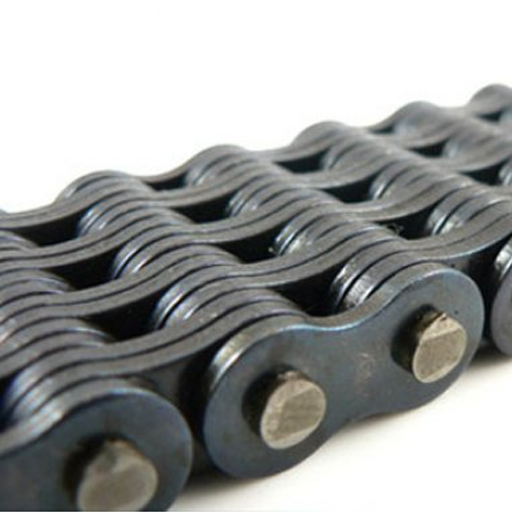 You can download the technical document about the product from the link below.
PDF Catalogue
You can download the technical document about the product from the link below.
PDF Catalogue BL GROUP
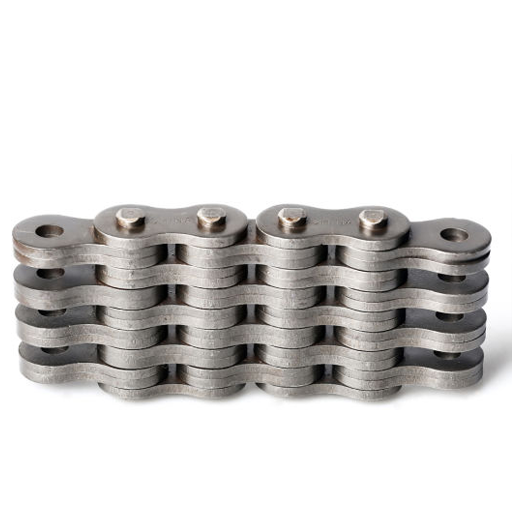 You can download the technical document about the product from the link below.
PDF Catalogue
You can download the technical document about the product from the link below.
PDF Catalogue LL GROUP
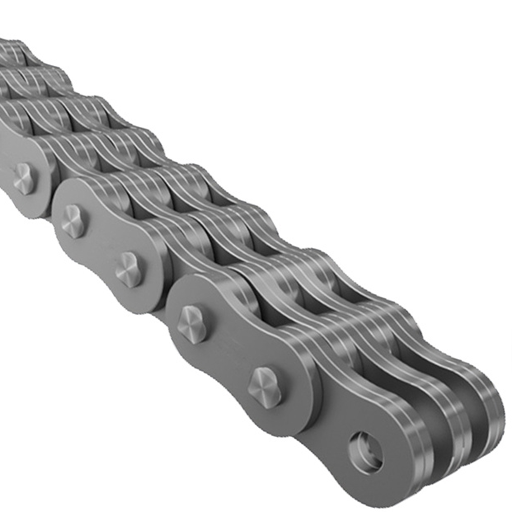 You can download the technical document about the product from the link below.
PDF Catalogue
You can download the technical document about the product from the link below.
PDF Catalogue Flyer Chains - Leaf Chain
Flyer chains (leaf chains) industrial chain models are used in technology systems that make people's work easier. In areas where human strength is not enough, elements such as cranes and forklifts come into play. These types of equipment, which offer an easy and effortless lifting mechanism, show themselves as technology and products supported by flyer chains. Known as leaf chain, these chain models present themselves as a product model used to complete and ensure the smooth operation of the lifting mechanism. Flyer chain models are used during transport, transfer, stacking, loading and various lifting operations.
Chain brand as a brand, Gurur Makina is always ready to serve and produce, and continues to work as a pioneer in the sector.
As these are lifting chains, these models are known to be multi-layered and high-strength.Flyer chains; made of steel and sturdy metal, these models prove to be products that, with proper maintenance, remain in use for a very long time. As the load gets heavier, the amount of force applied increases accordingly. Flyer chain models, for their part, are manufactured to withstand this force and tension. The inner and outer link plates of the product are variable, giving it a structure that allows easy modification to withstand different weights. With a variable structure in terms of pitch value and internal arrangement, this chain model supports safe crane and forklift use.
Areas of Use for Flyer Chains
Flyer chain to look at its areas of use, it is first necessary to consider work areas where lifting products is essential. Multi-layered and highly resistant, these chain models are widely used across all sectors involving product lifting operations. Both the sturdy material used and the robust structure created by the stacked layers have significantly contributed to making this chain model strong and high-quality. As a result, lifting operations are carried out smoothly and quickly. This chain model is commonly found on qualified equipment such as forklifts used in product storage, palletising and stacking operations.
For the lifting mechanism to operate smoothly, the strength and sturdy structure of the lifting chain are of great importance. The flyer chain models manufactured and brought to market by our company offer a structure that protects lifting systems and keeps them running continuously. Our chain models, offered in a wide range of multi-purpose variants, provide companies with the product support they need for continuity in business processes and smooth operation in workflow.
What Are the Features of Flyer Chains?
Also known as lugged chain, this chain model is particularly known for its sturdy and practical structure. With variable pitch and internal arrangement values, these models stand out as an element that complements lifting systems. The amount of chain used varies according to the model and brand of the equipment. Our product range offers features that meet the needs of every piece of equipment in every size. Although we use the element iron in chain production, it should be noted that pure iron is not used. Iron with an increased carbon ratio stands out as a more resistant and practical raw material in industrial applications. Our company is highly selective about the raw materials it uses in order to deliver a quality and durable product.
Flyer chain models have proven to be a material that simplifies work and inspires confidence across many sectors. Both the robustness of the material and the product's multi-layered, side-by-side structure have resulted in more reliable outcomes.
Our Flyer Chain Models
We offer an extensive product catalogue that meets every requirement in flyer chain models. With two categories – the AL group and the BL group – we have a rich product range to meet your chain needs in this field in the safest way possible. Our products, which are robust and practical, also offer our valued customers an economical and convenient shopping experience. Our key products and services will continue to assist you with the sizes and quantities required to meet your project's needs.
We offer a highly diverse range of products in the industrial chain category. With both our products and the ease of purchasing them, our company will always be ready to help you. The chains you request, suited to your vehicle or system, will be prepared by us and offered to you under the most economical terms. You can turn to us for help improving the efficiency of your forklifts and similar lifting equipment.
What Is a Fleyer Chain (Leaf Chain)?
Fleyer chain is a type of chain without rollers or bushings, consisting solely of stacked side plates joined together by pins. In Turkish, it is known as leaf chain, and in international sources or leaf chain it is known as.
Its key difference from roller chain lies in its function: fleyer chain is not designed to transmit power by rotating on a sprocket, but rather to pass over a pulley for linear pulling and lifting purposes. Since it has no rollers or bushings, more of the cross-sectional area within the same outer dimensions is dedicated to carrying load, which provides high tensile strength.
How to Read Fleyer Chain Coding
In fleyer chains, the code describes the series and the plate arrangement together. For example, in the BL634 code:
- BL: Series name (an ANSI-derived fleyer chain family).
- 6: Pitch code. The pitch is found by multiplying this number by 1/8 inch (6 × 1/8" = 3/4" = 19.05 mm).
- 34: Plate arrangement. There are 3 plates on one side of the pin and 4 on the other.
The same logic applies to the LH series: LH0822 code, 08 indicates the pitch code, while 22 indicates a 2+2 plate arrangement. As the arrangement gets larger, the chain's carrying capacity increases, but its width also increases; the pulley and groove size should be selected accordingly.
The Difference Between the AL, BL and LL Series
| Series | Standard | Typical use | Key feature |
|---|---|---|---|
| AL | ANSI B29.8 | Medium-load pulling and balancing | Thinner plates and lower load than the BL series |
| BL | ANSI B29.8 | Forklift masts, cranes, counterweights | The most common series; high tensile strength |
| LL | DIN 8152 / ISO 4347 | European-origin machinery, lifting systems | Metric measurement system, wide range of arrangement options |
Which series is fitted on your machine can usually be read from the code stamp on the plate. If the stamp has worn away, the series is determined by measuring the pitch size and counting the plate arrangement.
Fleyer Chain Dimensions
The table below summarises the pitch values and typical arrangements of commonly used fleyer chains. As breaking load varies by arrangement and manufacturer, the catalogue value should be confirmed before ordering.
| Code | Pitch | Pitch (mm) | Arrangement | Typical application |
|---|---|---|---|---|
| BL422 | 1/2" | 12,70 | 2 × 2 | Light-duty lifting, balancing |
| BL434 | 1/2" | 12,70 | 3 × 4 | Medium-load forklift mast |
| BL534 | 5/8" | 15,875 | 3 × 4 | Forklift, stacker |
| BL634 | 3/4" | 19,05 | 3 × 4 | Heavy-duty forklift, crane |
| BL646 | 3/4" | 19,05 | 4 × 6 | High-load lifting |
| BL866 | 1" | 25,40 | 6 × 6 | Heavy industrial lifting systems |
| LH0822 | 1/2" | 12,70 | 2 × 2 | European-origin machinery |
| LH1034 | 5/8" | 15,875 | 3 × 4 | Lifting and tensioning |
Where Is Leaf Chain Used?
- Forklift masts: The most common application. The up-and-down movement of the forks is provided by the fleyer chain.
- Cranes and lifting equipment: Points where linear pulling is required.
- Counterweight systems: Elevator-like balancing applications.
- Press and mould lines: Short-stroke movements under high load.
- Tensioning and securing: Connections requiring a constant pulling force.
The common point is this: a leaf chain always runs over a sheave, never on a sprocket. A leaf chain fitted onto a sprocket is damaged rapidly.
What Should Be Considered When Selecting a Leaf Chain?
- Determine the load to be lifted and the safety factor. In lifting applications, the safety factor is kept higher than for power transmission chains.
- Read the pitch and plate configuration correctly. An incorrect configuration will not seat in the sheave groove, even at the same pitch.
- Check the pulley diameter. A small sheave diameter accelerates fatigue cracking in the plates.
- Note the pin type. Standard pin, extended pin or special-head pin options vary depending on the machine.
- Assess the working environment. A corrosion-protected version is required in humid and chemical environments.
When Should a Leaf Chain Be Replaced?
In lifting systems the chain is a safety component; the replacement decision must not be delayed. The following signs require replacement:
- Elongation: Elongation exceeding 2% of the nominal length.
- Plate cracking: Cracks starting around the pin hole; even if seen on a single plate, the whole chain must be replaced.
- Corrosion: Deep rust pitting on the plate surface.
- Pin rotation or displacement: Loosening at the rivet head.
- Stiffened links that no longer articulate: The internal surfaces have dried out and worn.
For a detailed technical explanation, coding examples and a comparison with roller chain, see What Is a Fleyer Chain (Leaf Chain)? you can take a look at our content.
Leaf Chain Supply and Pricing
The factors that determine the price are the series (AL, BL, LL), pitch size, plate configuration, chain length and end-connection type. In applications such as forklift masts, the chain is usually prepared to size, complete with end fittings.
As Gurur Makina, we supply from stock in the AL, BL and LL groups; for non-standard sizes we offer sample-based manufacturing. When you send us a sample or a clear photo of the removed chain, we determine the pitch, configuration and length and provide a suitable match. For a quote price request form .
Frequently Asked Questions
What is the difference between a leaf chain and a roller chain?
A roller chain transmits power by rotating over a sprocket; a leaf chain performs linear pulling by running over a sheave. A leaf chain has no rollers or bushings, so it provides a higher tensile strength at the same size, but it cannot be operated with a sprocket.
Are 'yaprak zincir' and 'fleyer zincir' the same thing?
Yes. 'Yaprak zincir' is the Turkish equivalent of 'fleyer zincir'. In international sources it is referred to as leaf chain; all three terms describe the same product.
What does the code BL634 mean?
BL indicates the series, 6 indicates the pitch code (6 × 1/8" = 3/4" = 19.05 mm), and 34 indicates the plate configuration (3 plates on one side, 4 on the other).
Does a leaf chain run on a sprocket?
No, it doesn't. Without rollers and bushings, the sprocket teeth come into direct contact with the plates, causing rapid wear. Flyer chain must always be run over a roller of the correct diameter.
My forklift chain has stretched — can it just be shortened?
Shortening is not a solution. Elongation is the result of wear in the pin and plate holes; the remaining section of a shortened chain has fatigued to the same degree. In lifting systems, the chain must be replaced as a whole.