
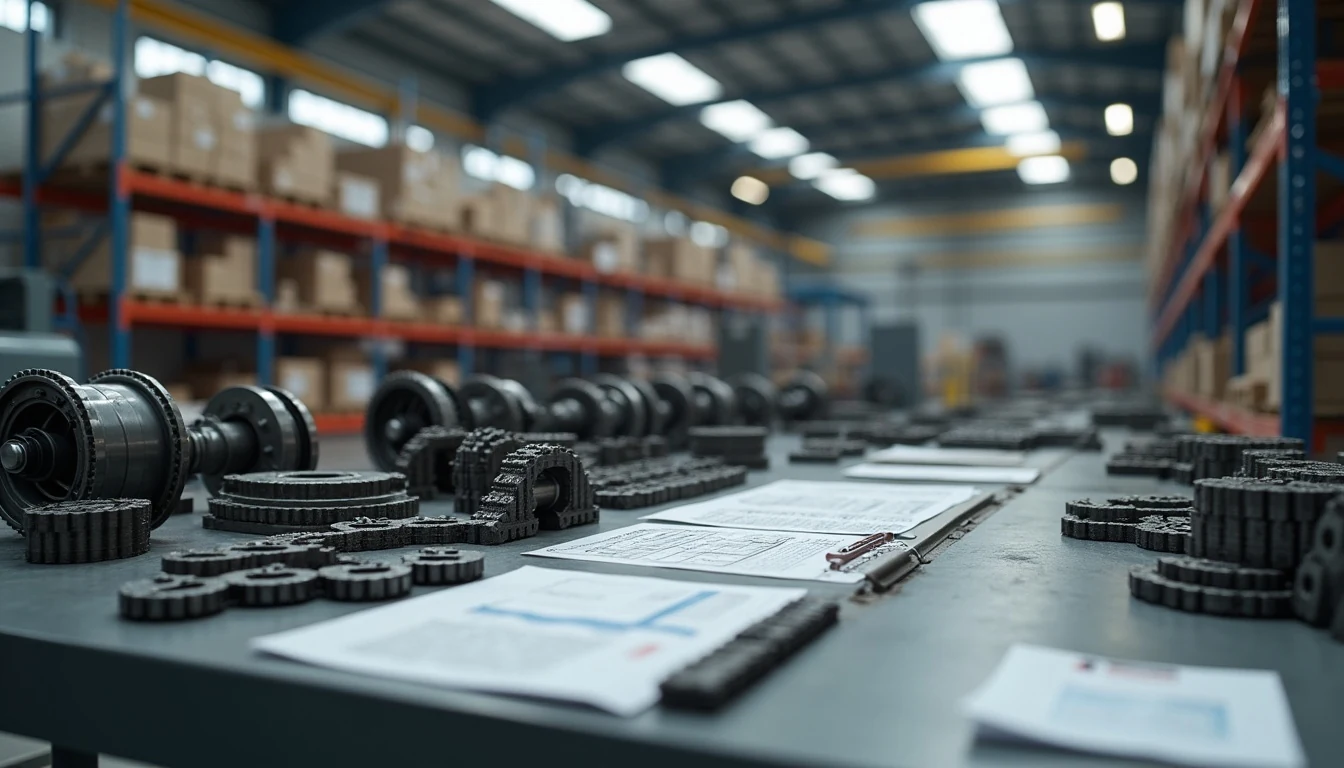
 Backup, Stock Planning and Continuity Guide for Industrial Chain and Gear Supply
One of the most critical problems causing production stoppages in industrial facilities is supply disruptions in power transmission parts that may seem minor but affect the flow of the entire line. Particularly when it comes to industrial chains, gears, sprockets and related power transmission parts, simply purchasing the product is not enough. What really matters is being able to source the right part with the right technical specification, at the right time, within a sustainable plan. For this reason, continuity in industrial chain and gear supply is not solely the responsibility of the purchasing department, but a shared responsibility of the maintenance, production, quality and technical teams.
Many businesses only focus on the supply process when a breakdown occurs. However, an unplanned ordering approach can lead to longer delivery times, incorrect product selection, increased costs and production losses. A stronger approach involves identifying critical spares, managing stock levels intelligently, verifying technical compatibility in advance, and working with a reliable supply partner. Once such a structure is established, maintenance processes become more predictable and the business can achieve continuity in its chain and gear systems.
In this guide, we will cover which factors need attention for continuity in industrial chain and gear supply, how to plan stock levels, why coordination between maintenance and purchasing matters, and how to establish the right procurement approach.
Why Is Continuity So Important in Industrial Chain and Gear Supply?
Although the chain and gear systems used on production lines may often seem like small components, they carry the system's main motion mechanism. If these parts fail or cannot be sourced on time, the entire line may come to a halt. Particularly in conveyor systems, transfer lines, automation solutions, packaging facilities and heavy industry applications, a delay in a single chain or gear component translates directly into operational loss.
One key reason continuity matters is that these components are not limited to mechanical compatibility alone. Factors such as chain pitch, tooth count, material grade, load-bearing capacity, environmental resistance and frequency of use must all be assessed together. The wrong product choice can sometimes cause wear within a short time, and in other cases lead to more serious equipment damage. For this reason, the supply process must be approached with technical precision.
In addition, fluctuations in global and local supply chains have made it essential for manufacturers to manage their supply chain in a more planned way. When the reorder time for a critical part is extended, any delay with no stock cover creates extra risk for the business. The aim here is not to stockpile excessive quantities, but to build a controlled supply structure by knowing exactly how critical each part is.
Which Parts Should Be Defined as Critical Spares?
Not every chain and gear product carries the same level of importance. The first step, therefore, is to classify the power transmission components within the business according to their criticality level. When defining critical spares, the focus should not be on the product's price alone, but on its impact on production if it fails.
Parts That Directly Stop Production
If the production line comes to a complete stop when a chain or gear becomes inoperative, that part should be regarded as a critical spare. This group typically includes main carrier conveyor chains, custom-size chain sprockets, gearbox-connected drive components, and custom-machined parts.
Products with Long Lead Times
Standard products can generally be sourced with relative ease. However, chain and gear components requiring special dimensions, special materials or project-specific manufacturing can have longer delivery times. Long-lead-time products should be prioritised in stock planning, as they extend downtime in the event of a failure.
Components with High Wear Risk
Wear occurs more rapidly in systems that are dusty, dirty, damp, exposed to chemicals or operating under heavy load. For chain and gear systems used in such environments, maintenance intervals and stock levels should be assessed together. It is particularly important to define a minimum safe stock level for products that require regular replacement.
How Should Stock Planning Be Done?
For continuity in industrial chain and gear supply, stock planning should be data-driven rather than random. The goal is not to tie up resources by holding excess stock, but to build a balanced structure that avoids delays at the point of need.
Review Past Failure and Consumption Data
Maintenance records, replacement frequency, failure history and order cycles form the basis of stock planning. By reviewing how often specific chains, gears or fasteners have been replaced over the past one to two years, decisions can be based on real data rather than estimates. This approach reduces unplanned purchasing.
Set Minimum and Maximum Stock Levels
The same stock rule should not be applied to every product. A minimum stock level should be defined for critical parts, with a system in place to automatically trigger an order when consumption rises. For less critical products, demand-based order management may be preferred instead. What matters here is that the purchasing and maintenance teams agree on the same stock definitions.
Account for Seasonal or Process-Based Peaks
In some businesses, maintenance shutdowns take place at specific times of the year. In certain sectors, production intensity increases ahead of the season. Such periodic fluctuations directly affect the timing of chain and gear orders. If these peaks are not factored into planning, a large number of parts may be needed at the same time, increasing supply pressure.
Technical Compliance Checks Are Central to Supply Continuity
Assuming that continuity can be ensured through stock alone is a mistake. If the product held in stock is not technically correct, production cannot resume. For this reason, technical compliance checks are just as important as lead time in the supply process.
Clarify Dimensional and Standard Compliance
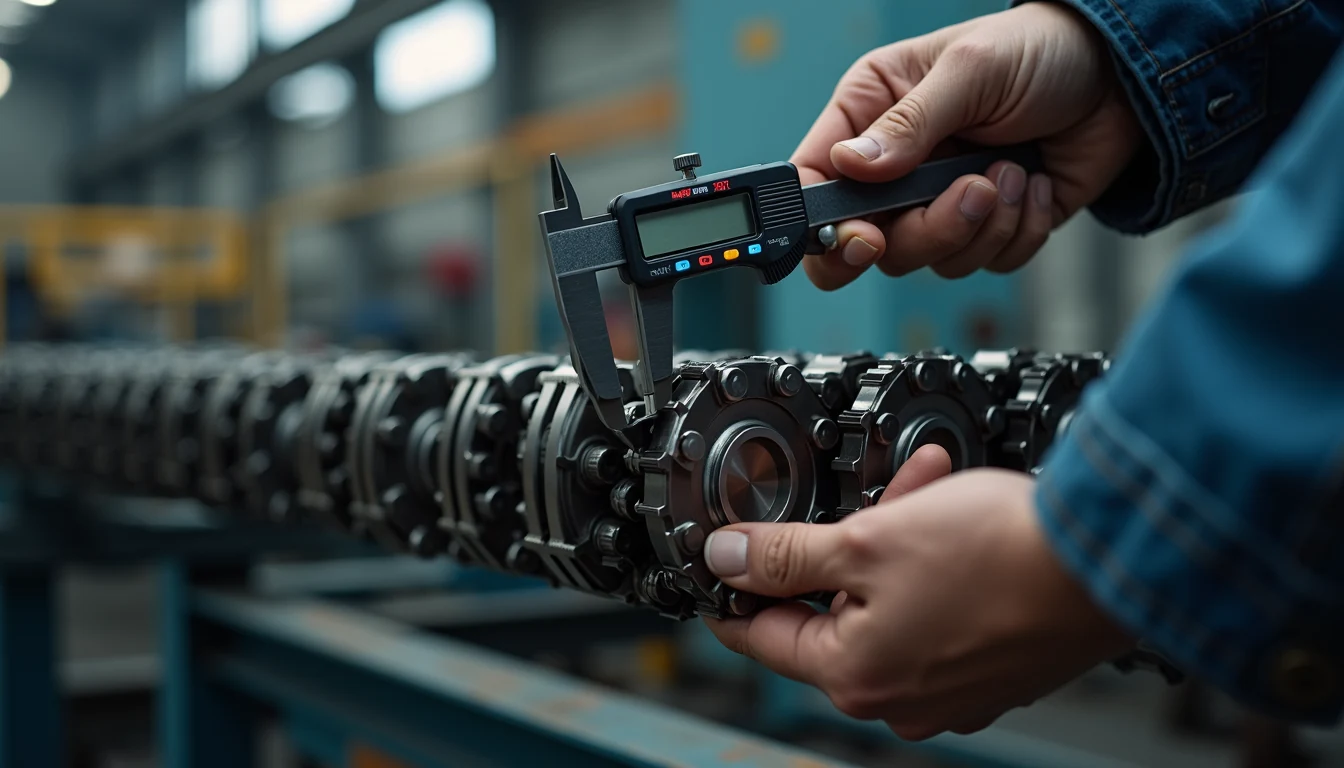
Orders placed without clarifying criteria such as chain pitch, inner width, roller diameter, tensile strength, number of teeth, hub structure and mounting dimensions carry risk. Especially on older systems, the accuracy of measurements taken on site should be verified. Wherever possible, it is best to proceed using a sample, technical drawing or product code.
Take the Operating Environment into Account
In areas with a risk of corrosion, stainless options may be required, while applications with high expected wear may call for different materials or surface treatments. Selections made without considering heat, moisture, chemical exposure and load characteristics can lead to premature wear of the product.
Be Careful When Using Equivalent Products
When supply pressure builds, turning to equivalent products on the market can be a common reflex. However, not every equivalent product delivers the same performance in the field. Therefore, if an alternative product is to be chosen, a technical comparison should be made, expert opinion sought where necessary, and the risk of use assessed in advance.
How Should Coordination Be Established Between Maintenance and Purchasing Teams?
In many businesses, the maintenance team operates with different priorities from the purchasing team. While maintenance wants to obtain the right part as quickly as possible, purchasing focuses on cost and supply conditions. Yet for continuity in chain and gear systems, these two functions need to work to a shared plan.
Create a Shared Critical Parts List
The parts maintenance regards as critical and the products purchasing wants to keep continuously in supply should be brought together in the same list. This list should be updated regularly, and for each product the technical description, alternative code, point of use and minimum stock level should be specified.
Use Preventive Planning Instead of Emergency Ordering
Emergency orders are usually more costly, more stressful and more prone to error. When the preventive maintenance schedule is combined with the purchasing plan, orders can be placed without being left to the last minute. This makes lead time management easier.
Keep Technical Communication Channels with the Supplier Open
Communicating only at the quotation stage is not enough. Regular communication should be maintained with the supplier regarding technical details, site conditions, revision needs and alternative solution requirements. This approach reduces the risk of choosing the wrong product and shortens resolution time.
How Does the Right Supply Partner Strengthen Continuity?
Continuity in industrial chain and gear supply is not only about product availability. The supply partner's level of technical knowledge, product range, production flexibility and after-sales support are also part of this structure. For this reason, businesses need to evaluate suppliers on an operation-focused basis, not just a price-focused one.
Work with Suppliers That Can Offer Technical Consultancy
Suppliers who understand the application in the field, can read technical drawings, verify dimensions and propose alternative solutions provide a significant advantage. In some cases, the problem is not simply sourcing the part, but the recurrence of a wrongly selected part.
Product Variety and Manufacturing Capability Matter
A business's needs may not be limited to standard products. Requests for custom dimensions, special applications or sector-specific production can arise. At this point, working with partners who can supply different types of chain and gear, and support custom manufacturing when needed, increases continuity.
Delivery Schedule and Stock Discipline Must Be Followed
What is expected from a supplier is not merely taking orders. Delivery date forecasting, stock visibility, the speed of alternative suggestions and the quality of post-order communication also matter. In the long run, a reliable partner helps a business build a more realistic maintenance plan.
To support a reliable supply approach, businesses also need to strengthen their own processes. For further technical insight into the role of power transmission parts in production, [Power transmission](https://en.wikipedia.org/wiki/Power_transmission), and for a maintenance planning approach, [preventive maintenance](https://en.wikipedia.org/wiki/Preventive_maintenance) resources provide a general framework.
A Practical Roadmap for Continuity in Chain and Gear Systems
Building a workable system matters just as much as theoretical knowledge. The roadmap below can help businesses bring more control to continuity in their chain and gear supply.
1. Make Your Inventory Visible
An up-to-date inventory should be created for all chains, gears, sprockets and related power transmission parts used on site. Which product is used on which line, its dimensions and the date of its last replacement should all be recorded.
2. Carry Out a Criticality Analysis
Parts that halt production, carry a high risk of wear, or have long lead times should be prioritised, and a critical stock policy should be defined for these products.
3. Standardise Technical Documentation
Drawings, product codes, photographs, dimensional records and application notes should be gathered in a single place. This prevents loss of information during staff changes or urgent orders.
4. Measure Supplier Performance
Criteria such as lead time, technical accuracy, quotation speed and after-sales support should be monitored regularly. This way, it is not only price but the total operational contribution that is assessed.
5. Hold Regular Maintenance and Purchasing Meetings
Upcoming maintenance needs, critical stock levels and the order calendar should be reviewed together through monthly or periodic meetings. This small discipline can prevent major production losses.

A More Controlled Supply Approach with Gurur Makina
The right supply approach for industrial chain and gear systems requires more than simply sourcing products. Selecting products suited to the application, clarifying technical details, aligning with the long-term maintenance plan and building a sustainable supply structure must all be addressed together. Working with solution partners who understand production and industrial needs closely, such as Gurur Makina, can help this process move forward in a more controlled way.
If you would like more information on related topics, you may also want to read [How to Carry Out Supplier Evaluation in Industrial Chain Procurement?](https://gururmakina.com.tr/endustriyel-zincir-tedarikinde-tedarikci-degerlendirmesi/), [How to Assess Technical Fit and Delivery Assurance When Selecting a Gear Supplier?](https://gururmakina.com.tr/disli-tedarikcisi-secimi/) and [How to Plan Maintenance and Supply Continuity for Power Transmission Parts?](https://gururmakina.com.tr/guc-aktarim-parcalari-bakim-tedarik/).
Conclusion
Continuity in industrial chain and gear supply does not simply mean carrying stock. The foundation of this structure lies in defining the right product to the right technical specifications, identifying critical spares, ensuring coordinated action between maintenance and procurement teams, and working with a reliable supply partner. This approach allows businesses to reduce the risk of unplanned downtime, make maintenance processes more predictable, and achieve a more stable operation across their power transmission systems.
If you want to establish a more controlled supply structure for chain and gear systems within your business, the soundest step is to assess your needs on an application-specific basis and plan the right solution alongside the technical details. This is because sustainable production most often begins with having the right part ready at the right time.