
 How to Handle Sample Submission and Dimensional Inspection in Chain and Sprocket Supply?
In industrial production, chain and sprocket systems are often the invisible yet critical backbone of the line. Conveyors, packaging machines, agricultural equipment, food processing lines, mining applications, textile machinery and custom manufacturing systems all run more smoothly, safely and sustainably with correctly selected power transmission components. For this reason chain and sprocket sample submission, does not simply mean requesting a replacement for an old part. It requires taking the correct measurements, describing the operating conditions, reading the wear marks, and clearly sharing technical information with the supplier.
When a chain or sprocket is manufactured to the wrong dimensions, the problem is not just that the part fails to fit. Line downtime can extend, additional labour may be needed during installation, sprocket-chain compatibility can be compromised, and connected equipment such as bearings and shafts may take on unnecessary load. In businesses where maintenance time is particularly limited, this can turn a planned stoppage into an unplanned breakdown. In this article, we focus on a single search intent to cover sample submission, dimensional inspection and technical verification in chain and sprocket supply.
Why Is Chain and Sprocket Sample Submission a Critical Step?
Sample submission establishes a shared technical language between the supplier and the business. Photographs, brand information or approximate measurements are often useful for an initial assessment, but on their own they may not be sufficient for custom-dimensioned, worn, revised, or non-standard-condition parts. A sample part allows the manufacturer or supplier to examine the actual dimensions, connection details, pitch values, tooth form and wear type together.
This step becomes especially important when: there is no original technical drawing for the machine, the part has previously been revised at a different workshop, the chain and sprocket are to be replaced together, the operating environment involves demanding conditions such as moisture, dust, heat or chemical exposure, or the production line cannot be stopped for long. Under these conditions, proceeding on the basis of a sample reduces uncertainty before ordering and makes the supply process more controlled.
For companies experienced in industrial chain and sprocket supply, such as Gurur Makina, a sample is not just a part to be measured; it is also technical data that reveals how the system operates. Signs such as the direction of wear, marks at the tooth roots, deformation in the chain bush and pin areas, lubrication quality, and shaft misalignment can all influence the supply decision.
What Information Should Be Prepared Before Sending a Sample?
The correct procurement process begins before the part is dispatched. If the business's maintenance, purchasing and production teams carry out brief preliminary preparation, the supplier can carry out a much faster and more accurate assessment. This preparation makes reordering easier for both standard products and custom-made chain and sprocket systems.
Machine and usage information
The machine, task and load under which the part operates should be specified. It should be clearly stated whether it is a conveyor chain, a transfer chain, a carrier chain with a special attachment, or a sprocket associated with a gearbox output. If available, machine brand and model information, line length, speed, operating time and shift pattern can also be shared. This information affects not only dimensional fit but also material and surface treatment preferences.
Current fault or reason for replacement
Why is the part being replaced? Has it broken, has it stretched, is tooth skipping occurring, has noise or vibration increased, or is a preventive replacement being carried out as part of planned maintenance? The answers to these questions enable the supplier not only to manufacture the same part, but also to recommend a more accurate solution where necessary. For example, if the problem recurs after only the chain is replaced, sprocket wear or line alignment should also be checked.
Quantity, lead time and continuity requirements
When sending the sample, the required quantity, target lead time and whether regular supply will be needed in future should be specified. A one-off emergency replacement and periodic maintenance stock do not call for the same planning approach. For parts in regular use, it is more sensible to establish technical coding, a stock plan and an alternative supply scenario. This issue is also important in terms of continuity planning in chain and sprocket supply .

Measurements to Check on a Chain Sample
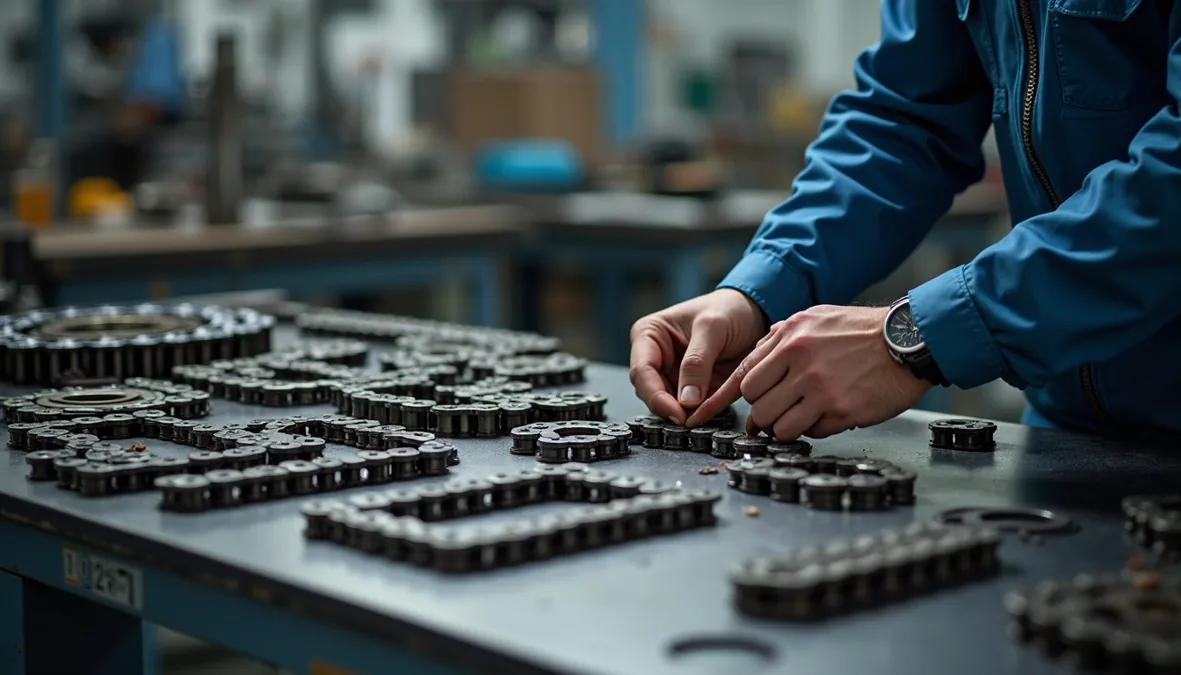
When evaluating a chain sample, total length alone is not taken into account. In industrial chains, basic compatibility is determined by pitch, roller diameter, inner width, pin diameter, plate thickness, connection type and any special attachments. Care should be taken when measuring worn chains, as stretch or deformation can give a misleading picture of the actual production dimensions.
Pitch and roller dimensions
Pitch is the distance between the centres of two pins on the chain and is the main determinant of sprocket compatibility. Choosing the wrong pitch can prevent the chain from seating properly on the sprocket and cause it to wear out quickly. Roller diameter and inner width should also be assessed together with the sprocket tooth form. If the sample is heavily worn, taking measurements from several links with as little deformation as possible, rather than a single link, gives a more reliable result.
Connection, pin and fitting details
In standard roller chains, the connecting link, segment type and pin structure are important. In conveyor or special application chains, however, there may be attachments such as lugs, holes, extended pins, plastic fittings, scrapers, carrying tables or special connection forms. Supporting these details with photographs makes technical review easier, even if the sample is damaged in transit.
Reading wear marks
Heavy wear on one side of the chain can indicate an alignment problem in the system. If there is excessive clearance in the pin and bush area, lubrication, load or the operating environment should be reassessed. Signs such as a broken plate or a snapped pin may point to a more extensive application issue that cannot be resolved by a dimensional change alone. For this reason, the wear marks on the sample must always be shown to the supplier.
How Is Dimensional Inspection Carried Out on a Sprocket Sample?
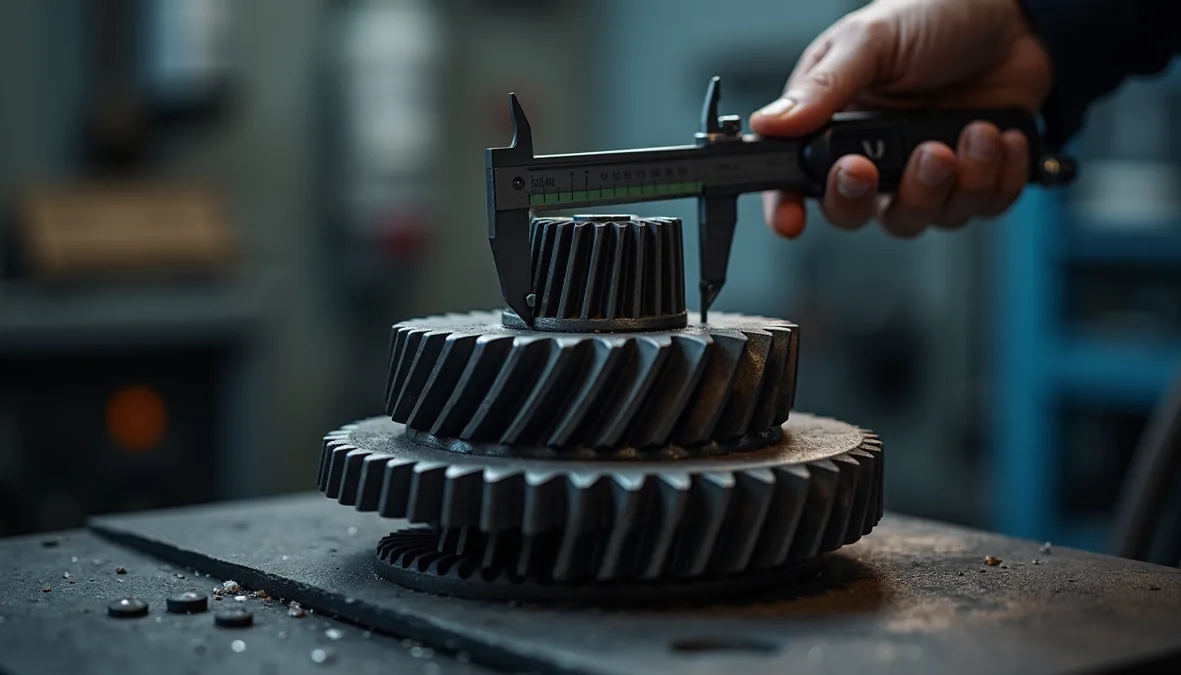
On the sprocket side, dimensional inspection requires greater geometric attention. Tooth count, outside diameter, hub size, keyway or key seat, bore diameter, thickness, material preference and tooth profile are all assessed together. In sprockets that run with a chain, the tooth profile must be compatible with the chain pitch. Otherwise, even if the chain is new, noise, vibration and premature wear can occur during operation.
Tooth count, diameter and hub information
When sending a sprocket sample, the tooth count should be clearly noted. The part can be marked to avoid miscounting on worn teeth. Outside diameter and hub diameter are important in terms of installation space. If the sprocket fits onto a shaft, the bore diameter, keyway and clamping system must also be measured correctly. Placing an order based only on the outside diameter is risky, particularly for special machinery.
Keyway and connection surfaces
Keyway dimensions are one of the critical details for the safe operation of the shaft connection. If the keyway width, depth and position are incorrect, this can create play between the sprocket and the shaft, or cause a mismatch during assembly. If there is a flange, bolt holes, bush connection or special fixing surfaces, these should be photographed together with the sample and, where possible, supported with a dimensioned sketch.
Chain and sprocket should be assessed together
In a system, replacing only the chain or only the sprocket may not fully resolve the problem. A worn sprocket can damage a new chain in a short time, while an elongated chain can in turn damage the tooth profile of a new sprocket. For this reason, examining both parts together during the sourcing process gives a more reliable result. For broader selection criteria, technical compatibility when choosing a sprocket supplier can also be consulted.
Points to Consider During Sample Packaging and Shipping
Shipping the sample safely is just as important as measuring it correctly. Heavy, oily, sharp-edged or worn metal parts can be damaged in transit or puncture the packaging. Cleaning the part, protecting sharp edges and labelling it properly allows the supplier to examine the sample safely.
Cleaning and labelling
The sample should not be fully polished or ground down, as wear marks are important for technical assessment. However, excess oil, dirt and swarf should be cleaned off, and the part should be wrapped securely. Each sample should be labelled with the machine name, place of use, contact person and, if available, the part code. If more than one sample is being sent, each part should be bagged separately or kept apart within the box.
Photo and brief description file
Sending a brief description file together with the sample speeds up the process. This file should include the machine the part is used in, the reason for replacement, estimated operating conditions, the quantity required and urgency. Photos showing the part's position on the machine should also be shared. This approach is in line with the preparing a chain and sprocket supply file process.
What Should Be Expected from the Supplier During the Technical Verification Process?
Once the sample reaches the supplier, dimensional verification, standard comparison and manufacturability assessment should be carried out. It is not enough for the supplier to simply provide a price; they are expected to understand the part's intended use, confirm the dimensions and ask technical questions where necessary. This approach reduces purchasing risk, particularly on critical production lines.
A good supplier checks the following points using the sample: does the part correspond to a standard series product, is custom manufacturing required, is the current wear misleading the measurement, is the chain and sprocket match correct, is a specific material or heat treatment required, and does the delivery time fit the business's maintenance schedule? A quotation given before these questions are clarified may look quick in the short term but can cause problems in the long run.
In the international technical approach too, dimensions, safety and machine compatibility are assessed together. For general standards awareness, ISO resources can be consulted; for a machine safety perspective, OSHA machine guarding guidelines can be reviewed. These external resources should be regarded as supporting references for safe working practices and standards awareness, rather than a direct basis for product selection.
Common Mistakes Made When Getting a Quote Based on a Sample
When sample shipping is not managed correctly, the supply process can be prolonged or the wrong product may result. The most common mistake is asking for an exact copy of a worn part, even though some dimensions may have changed due to wear. The second mistake is assessing the chain and sprocket separately. The third mistake is requesting a quote based on dimensions alone, without sharing the operating conditions.
Another mistake is skipping technical checks under urgent delivery pressure. The production line may have stopped, but remaking an incorrectly produced part wastes even more time. This is why it is necessary to move quickly but in a controlled way. Clear communication should be established with the supplier, and missing information should be completed during the first conversation wherever possible. Businesses wishing to proceed systematically before purchasing chain and gear purchasing checklist can also benefit from its content.
How Should Sample Records Be Kept for Maintenance and Supply Continuity?
Sending samples should not be used solely to resolve that day's order. Once a proper record-keeping system is in place, the need to take measurements, photograph the part and re-explain it for later orders of the same part is reduced. This saves the maintenance team's time and speeds up purchasing processes.
Part code and technical archive
A clear part code that is understood within the business can be created for each chain and sprocket. This code should be linked to the machine name, area of use, dimensional information and supply history. When photographs, technical drawings, revision notes and previous order details are kept in a digital folder, maintenance planning can be carried out more effectively.
Stock and reorder plan
It is important to set a minimum stock level for chains and sprockets used on critical lines. It is not always necessary to keep large quantities of every part in stock; however, a backup plan should be made for parts with long lead times, custom production, or those that would stop the line in the event of a breakdown. This kind of planning shifts the focus away from price as the sole criterion and towards overall operational safety.
Conclusion: The Right Sample Means a Safer Supply Process
Sending chain and sprocket samples, is one of the most important steps in choosing the right part in industrial supply. When usage information, dimensional details, the cause of failure, photographs and delivery requirements are conveyed correctly along with the sample, the supplier can carry out a more accurate assessment. This reduces the risk of incorrect dimensions, incompatible assembly, premature wear and unnecessary line downtime.
Gurur Makina supports businesses' maintenance and production processes in chain and sprocket systems through its approach focused on supply, dimensional control, technical evaluation and continuity. Clarifying the part's place of use, current problem and required quantity before sending a sample creates a more reliable process for both the purchasing team and maintenance personnel.