
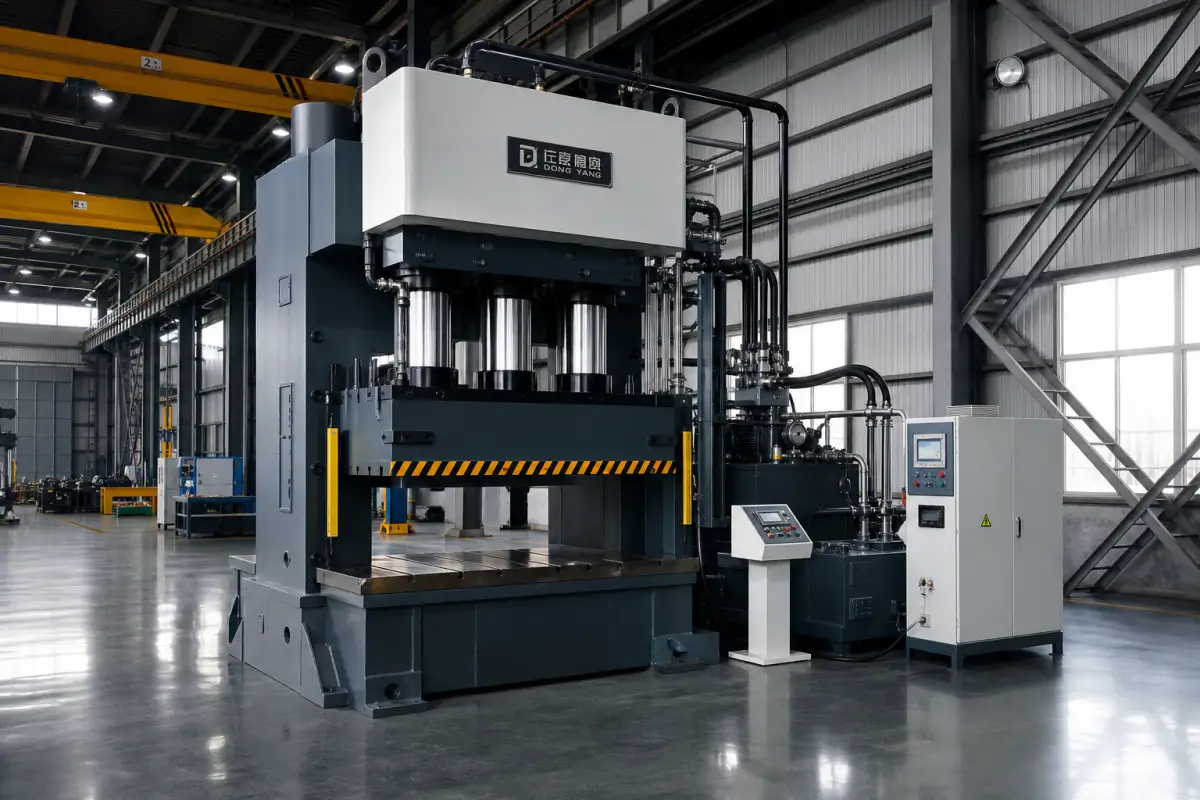
Industrial press machines, serve as fundamental production equipment in many sectors, including metalworking, plastic forming and sheet metal production. With a wide range of applications from automotive to white goods and from construction to aerospace, these machines play a critical role in transforming raw materials into the desired shape. However, choosing the right press machine, complying with safety standards and carrying out regular maintenance are vital for both production efficiency and occupational safety.
In this guide, industrial press machines we will cover everything you need to know in detail — from hydraulic and mechanical press types to safety measures, and from maintenance strategies to total cost of ownership analysis.
What Are Industrial Press Machines?
Industrial press machines are powerful machines that deform materials by applying a high amount of force. Used in processes such as cutting, bending, drawing, forging and pulverising, presses form the backbone of production lines. Their basic operating principle is that energy obtained from a power source is transferred to the workpiece via a die system.
Basic Components of Press Machines
An industrial press machine consists of the following main components:
- Frame (Body): This is the skeletal structure that carries all the loads of the machine. It is manufactured in various designs, including C-type, H-type and four-column.
- Slide (Ram): This is the component that carries the die and moves up and down. Stroke force and speed determine the press capacity.
- Die Set: The upper and lower die set that shapes the workpiece. Customised according to product geometry.
- Power Unit: Power is supplied by the pump and cylinder in hydraulic presses, and by the flywheel and crankshaft system in mechanical presses.
- Control System: Modern PLC- or CNC-based control units precisely manage stroke depth, speed and pressure parameters.
Applications of Industrial Presses
Industrial press machines are widely used in the following sectors:
- Automotive: Forming of body panels, chassis components and engine parts
- White Goods: Manufacturing of steel covers, housings and internal parts
- Electronics: Pressing of connector, contact and circuit board components
- Construction: Processing of structural steel, fasteners and sheet metal profiles
- Aerospace and Defence: Forging of high-precision alloy parts
For more information, conveyor belt systems and TCO analysis in industrial machinery selection you can also take a look at our articles.
Hydraulic Press Machines: Structure, Operation and Advantages
Hydraulic presses are machines that operate using hydraulic fluid pressure, based on Pascal's law. The pressure generated by a hydraulic pump is transmitted to the piston inside the cylinder, applying the required force to the ram. This system offers the advantage of delivering full stroke force at a constant pressure.
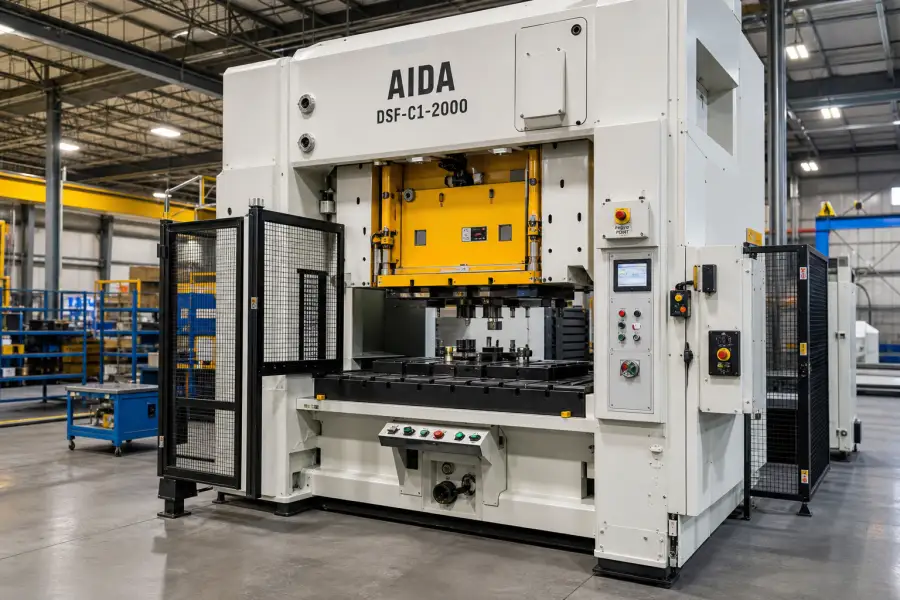
Technical Specifications of Hydraulic Presses
- Capacity: Stroke force ranging from 20 tonnes to 10,000+ tonnes
- Stroke Depth: Flexible production capability with adjustable stroke length
- Pressure Control: Precise pressure adjustment with proportional valve systems
- Speed: Approach, pressing and return speeds can be adjusted independently
- Energy Efficiency: 30-40% energy savings with variable-flow pumps
Advantages of Hydraulic Presses
- Operating at Full Force: Maximum force is applied at every point of the stroke, making it ideal for deep drawing operations.
- Flexibility: Stroke length, pressure and speed parameters can be adjusted according to the process.
- Overload Protection: Relief valve systems automatically release loads that exceed the set limit.
- Low Noise: Operates more quietly compared to mechanical presses.
- Multi-Purpose Use: Suitable for a range of processes such as sheet metal forming, powder metallurgy, forging and rubber pressing.
Points to Consider with Hydraulic Presses
Hydraulic fluid leaks, seal lifespan and oil temperature management are priority issues in the maintenance of hydraulic presses. In high-pressure systems, seals must be replaced periodically, oil filters must be cleaned, and the cooling system must be checked. In addition, industrial machine maintenance and predictive maintenance strategies we examined this topic in detail in our article.
Mechanical Press Machines: Operating Principle and Areas of Use
Mechanical presses are a type of press that converts electric motor power into mechanical motion using a crankshaft, eccentric, or flywheel mechanism. They offer higher operating speeds compared with hydraulic presses and are preferred on mass production lines.
Types of Mechanical Presses
- Crank Presses: This is the most common type of mechanical press. Available in single-crank and double-crank models, it is used for sheet metal cutting, bending, and piercing operations.
- Eccentric Presses: With their compact structure, they are suitable for small and medium-capacity operations. They provide precise stroke control.
- Pneumatic Presses: Operating on compressed air, these presses are used for low-tonnage assembly and joining operations.
- Servo Presses: These next-generation presses, driven by an electric servo motor, offer full control over the stroke profile and provide energy efficiency.
Advantages of Mechanical Presses
- High Production Speed: Enables mass production at speeds between 30 and 600 strokes per minute.
- Precise Repeatability: The same depth and position are repeated with every stroke.
- Low Labour Cost: Compatible operation with automatic and semi-automatic feeding systems.
- Compact Design: A smaller footprint compared with hydraulic presses of the same tonnage.
- Energy Efficiency: High stroke force with low motor power, thanks to the flywheel's kinetic energy storage capability.
For more details on selecting a mechanical press, in our conveyor belt selection guide we also cover the topic of production line integration.
Hydraulic vs Mechanical Press Comparison: Which Is Right for You?
Choosing the right press machine depends on the nature of the production process, part geometry, and production volume. The comparison table below will support your decision-making process:
| Criterion | Hydraulic Press | Mechanical Press |
|---|---|---|
| Stroke Force | Constant and full throughout the stroke | Maximum at bottom dead centre |
| Speed | Low-medium (8-40 strokes/min) | High (30-600 strokes/min) |
| Stroke Depth | Fully adjustable | Fixed or limited adjustment |
| Suitable Processes | Deep drawing, forging, moulding | Cutting, bending, piercing, stamping |
| Energy Consumption | Medium-high | Low-medium |
| Noise Level | Low | Medium-high |
| Maintenance Cost | High (oil, seals, filters) | Low-medium |
| Initial Investment | Medium-high | Low-medium |
| Flexibility | Very high | Medium |
Selection Criteria: Which Press for Which Situation?
For Deep Drawing Operations
If you are manufacturing automotive body panels, kitchen sinks, and similar deep-drawn parts, a hydraulic press is the right choice. Its ability to apply constant force allows the material to deform without tearing.
For Mass Production Cutting and Stamping
If high-volume sheet metal cutting, stamping, and piercing operations are required, a mechanical press is more efficient. High stroke speed and low energy consumption create a cost advantage in mass production.
For Complex Part Geometry
For complex parts requiring different depths and forces, servo press technology combines the advantages of both press types. It delivers flexible production with a programmable stroke profile.
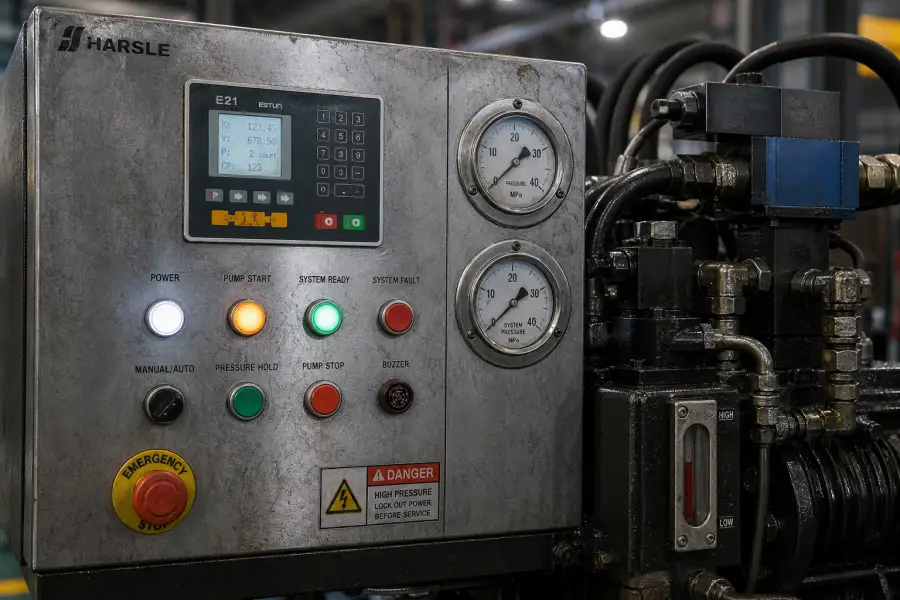
Safety Standards for Industrial Press Machines
Pres makinaları, iş güvenliği açısından en riskli endüstriyel ekipmanlar arasında yer alır. Türkiye’de ve uluslararası arenada pres güvenliğini düzenleyen standartlar ve yönetmelikler, operatör ve ekipman koruması için zorunlu çerçeveler oluşturur.
TS EN ISO 16092 and Related Standards
The primary reference standard for the safety of press machines is TS EN ISO 16092‘dir. Bu standart, makinenin tasarımından kurulumuna, kullanımından bakımına kadar tüm yaşam döngüsünde güvenlik gereksinimlerini tanımlar. Ayrıca:
- TS EN 692: Safety requirements for mechanical presses
- TS EN 693: Safety requirements for hydraulic presses
- Machinery Directive 2006/42/EC: Mandatory CE marking in line with EU compliance
- İSGÜM Regulations: Türkiye’de iş güvenliği uyumlu kullanım şartları
Critical Safety Equipment
- Light Curtains: Detects when the operator's hands enter the danger zone and stops the machine. Must comply with the EN 61496 standard.
- Two-Hand Control System: Requires both hands to be on the control buttons at the same time, eliminating the risk of a single hand being trapped.
- Safety Enclosure Systems: Guards that prevent physical access to the die area. Available in fixed and movable types.
- Emergency Stop Buttons: Stop devices accessible from all control points, logically designed with a red-yellow colour scheme.
- Güvenlik PLC’leri: Standart PLC’lerden farklı olarak çift kanallı çalışma ve kendini test etme yeteneğiyle güvenlik kritik uygulamalar için tasarlanmıştır.
For comprehensive information on safety standards, conveyor belt safety standards and risk assessment you can read our article. You can also refer to ISO 16092 and the OSHA Machine Guarding Guide for international standards.
Maintenance and Repair Strategies for Press Machines
Endüstriyel pres makinalarında bakım, yalnızca arıza sonrası müdahale değil, proaktif bir üretim stratejisinin parçası olmalıdır. Doğru bakım yaklaşımı, makine ömrünü %30-50 uzatabilir ve plansız duruş sürelerini %60’a kadar azaltabilir.
Periodic Maintenance Plan
| Maintenance Interval | Task | Responsible |
|---|---|---|
| Daily | Oil level check, leak inspection, general cleaning | Operator |
| Weekly | Filter inspection, die alignment check, fastener tightening | Maintenance Technician |
| Monthly | Hydraulic oil change (based on analysis), gasket inspection, valve cleaning | Maintenance Team |
| Quarterly | Electrical connection check, safety system test, sensor calibration | Specialist Technician |
| Half-Yearly | Cylinder seal replacement, pump performance test, frame inspection | Manufacturer/Authorised Service |
| Annual | <Full overhaul, calibration, safety certification renewal | Manufacturer/Authorised Service |
Predictive Maintenance Approach
Predictive maintenance is a data-driven maintenance strategy based on the machine's actual condition. Methods such as vibration analysis, thermal imaging, oil analysis and acoustic emission detect potential failures before they occur.
- Vibration Analysis: Abnormal vibration patterns in bearings, the shaft and the frame indicate early wear and alignment problems.
- Thermal Imaging: Hot spots in the hydraulic system reveal valve and pump wear and blockages in oil flow.
- Oil Analysis: Metal particles, water content and viscosity changes in the hydraulic oil provide critical data on system health.
- Acoustic Emission: An advanced monitoring technique used to detect crack formation and material fatigue.
Total Cost of Ownership (TCO) in Industrial Press Selection
Focusing solely on purchase price when selecting a press machine can be misleading in the long run. Total cost of ownership (TCO) analysis offers a holistic assessment covering purchase, installation, operation, maintenance and scrap value.
TCO Components
- Purchase Cost: Machine price, freight, customs and installation expenses. Hydraulic presses generally have a 20-40% higher initial cost than mechanical presses.
- Installation and Training: Foundation preparation, electrical and hydraulic connections, and training for operators and maintenance staff.
- Energy Cost: Hidrolik preslerde pompa ve ısıtıcı tüketimi, mekanik preslerde motor ve volan kayıpları. Yıllık enerji maliyeti, TCO’nun %15-25’ini oluşturabilir.
- Maintenance and Spare Parts: Periodic maintenance materials, gasket and filter replacements, and die repairs.
- Unplanned Downtime Cost: Production loss caused by breakdowns. Hourly production loss cost can range from USD 500 to 5,000 depending on the sector.
- Scrap Value: The machine's value at the end of its economic life. Mechanical presses, being less complex, have a higher scrap value.
TCO Calculation Example
A 10-year TCO analysis for a 100-tonne hydraulic press:
- Purchase: USD 180,000
- Installation and training: USD 15,000
- Energy (10 years): USD 85,000
- Maintenance and spare parts (10 years): USD 62,000
- Unplanned downtime (10 years): USD 35,000
- Scrap value (removal): -USD 12,000
- Total TCO: USD 365,000
For detailed information on TCO analysis, please see our article on total cost of ownership analysis in industrial machine selection .
Servo Press Technology: The Manufacturing Solution of the Future
Servo presses are next-generation press machines that run on direct-drive electric motor technology and allow full control of the stroke profile. Combining the advantages of hydraulic and mechanical presses, servo technology is revolutionising the production of particularly high-complexity parts.
Key Advantages of Servo Presses
- Programmable Stroke Profile: Different speed, depth and dwell parameters can be defined for each stroke.
- Energy Efficiency: Rejeneratif frenleme ile harcanan enerjinin %30’una kadar geri kazanımı.
- Low Noise: Impact noise is minimised thanks to the controlled stroke profile.
- Fast Die Change: Otomatik kalıp bağlama ve ayarlama sistemleriyle set-up süresi %70’e kadar azalır.
- Data Collection: The force, position and duration data of every stroke are recorded to enable quality tracking.
For more information on servo press technology and industrial automation, you can read our article on industrial automation and conveyor integration .
Conclusion: A Strategic Approach to Choosing the Right Press Machine
Industrial press machinesis one of the cornerstones of production processes, and the right choice, safe operation and regular maintenance directly affect your business's competitiveness. Hydraulic presses are ideal for deep drawing and flexible production requirements, while mechanical presses excel in high-speed mass production. Servo press technology, meanwhile, combines the best of both worlds and is setting the production standards of the future.
We recommend following these steps when making your investment decision:
- Analyse your production process in detail
- Determine part geometry, material type and production volume
- Calculate long-term costs by carrying out a TCO analysis
- Verify compliance with safety standards
- Evaluate servo press technology
- Sign a maintenance and support agreement with the manufacturer
Gurur Makina , we provide technical consultancy services on industrial press machines and conveyor systems. To assess your project specifications and determine the most suitable solution, please contact us.