
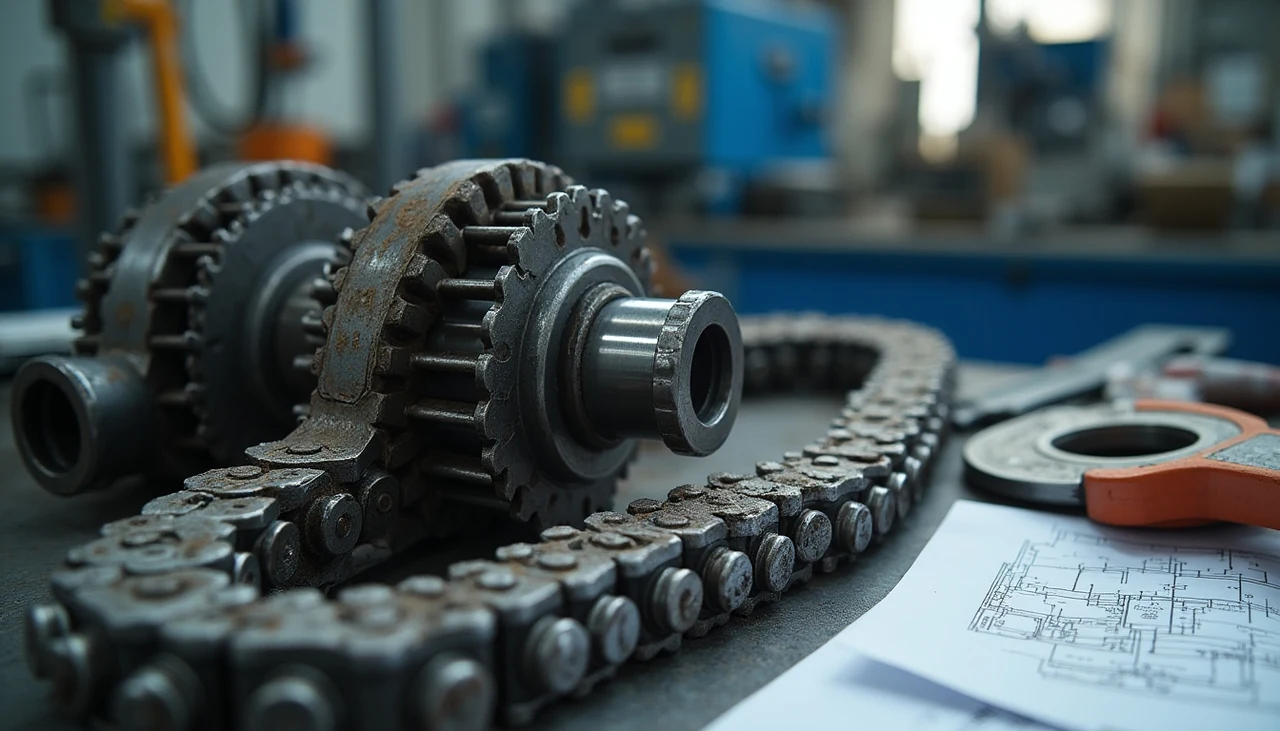
Chain and sprocket mechanisms, which form the backbone of the power transmission system in industrial facilities, are the heart of continuously operating machinery. Over time, these components fail due to wear, fatigue and external factors, and without planned maintenance, they can bring production to a standstill. Knowing the causes of industrial chain and sprocket failure shapes not only the response after a failure occurs, but also the strategies used to prevent it. In this article, drawing on field experience, we will examine the most commonly encountered types of failure, their underlying causes and permanent solutions.
The Fundamental Nature of Industrial Chain and Sprocket Failures
Due to their working principle, chain and sprocket systems are under constant mechanical contact and friction. With every rotation, the chain pin seating into the sprocket tooth, the bearing surfaces and the connecting elements wear at a micro level. This wear is not, in itself, a cause of failure, but a physical reality of the system. The real issue is the rate at which this natural wear occurs and what measures are taken before the wear limit is reached.
In industrial businesses, approximately seventy percent of chain and sprocket failures can be detected and prevented in time. The remaining thirty percent result from unexpected situations such as sudden load changes, material defects or operator errors. For both groups, making an accurate diagnosis is the first step in determining the correct course of action. Why Are Quality Standards Critical in Industrial Chain and Gear Supply? gaining detailed information on this subject forms an important reference point in the fault diagnosis process.
Common Types of Failure and Their Causes
Wear and Elongation
The most commonly observed type of failure in chain systems is wear caused by friction between the pin and bushing. This wear increases the chain's pitch length and is referred to as chain elongation. When elongation exceeds a certain threshold, the chain no longer seats properly on the sprocket and irregular power transmission begins.

The main causes of wear include insufficient lubrication, a dirty working environment and excessive tension. In systems operating in particularly dusty or humid environments, the lubrication film breaks down quickly and direct metal-to-metal contact begins. This dramatically increases the rate of wear.
The amount of elongation must be kept within the limits recommended by chain manufacturers. The generally accepted criterion is that the increase in chain pitch length should not exceed three percent. Chains that exceed this threshold begin to wear the sprocket as well, starting a chain-reaction damage process that requires both the chain and sprocket to be replaced together. How Is Material Selection Made in Industrial Chain and Gear Systems? this subject is an important topic that details the role of material selection in preventing this type of damage.
Sprocket Tooth Wear
Wear on sprocket teeth occurs as a natural consequence of chain elongation. An elongated chain shifts the contact point on the sprocket from the tip of the tooth towards its root. This shift distorts the tooth profile and creates a mismatch between the sprocket and the chain.
Tooth wear can be one-directional or two-directional. One-directional wear is seen in applications where the system rotates in only one direction. Two-directional wear, on the other hand, occurs on both tooth surfaces in systems that operate back and forth. In both cases, the resulting distortion in the tooth profile reduces power transmission efficiency and causes an increase in vibration and noise.
Sprocket material, heat treatment condition and surface hardness are the key parameters that determine wear resistance. Sprockets that have undergone surface-hardening processes such as case carburising or nitriding operate with a much longer service life under suitable lubrication conditions.
Fatigue Fracture
Fatigue fracture in chain plates and sprocket teeth is a progressive damage mechanism caused by repeated loading. The stress applied to the component in each cycle forms micro-cracks over time, even when it remains below the material's elastic limit. After a certain number of cycles, these cracks reach a critical size and sudden fracture occurs.
Fatigue failure poses a particular risk in systems subject to shock loading. Load-and-start cycles in conveyor systems, impulsive power transmission in press mechanisms, and rapid acceleration in lift systems are the main operating conditions that trigger fatigue failure. On this subject, the ISO 15654 chain fatigue test standard the test methods defined within it serve as the reference source for quantitatively determining fatigue strength.
The most effective way to prevent fatigue failure is selecting the right chain and sprocket for the system. Although over-engineering means higher costs, a safety margin is essential in critical applications where a sudden failure would cause production losses.
Noise and Vibration Issues
Increased noise and vibration in chain and sprocket systems is usually a sign of another underlying issue. A correctly installed, properly tensioned and adequately lubricated chain-sprocket set runs quietly and without vibration. A rise in noise should be treated as an early warning signal of the underlying cause.
Common causes of noise include incorrect chain tension, sprocket misalignment, worn chain guides and insufficient lubrication. Each cause produces a different noise characteristic. Experienced maintenance technicians can identify the source of the problem from the tone and timing of the noise.
Vibration analysis is a powerful tool for fault diagnosis. Low-frequency vibrations are usually signs of wear and misalignment, while high-frequency vibrations point to bearing damage or loose fasteners. Regular vibration measurements allow faults to be detected before visible symptoms appear.
Corrosion and Environmental Effects
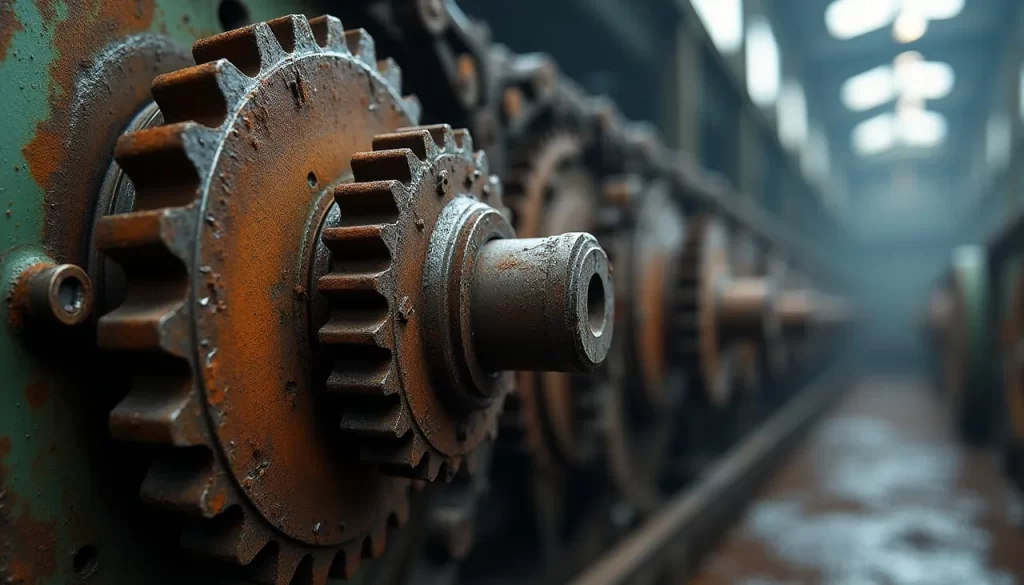
Most industrial environments present aggressive conditions for chain and sprocket systems. Moisture, chemical fumes, acidic or alkaline environments and temperature fluctuations initiate corrosion on metal surfaces. Corrosion is not limited to surface rust formation; it also increases the wear rate, reduces fatigue strength and breaks down the lubrication layer.
The cleaning chemicals used in food processing plants, the moisture and acid fumes in paper mills, and the high temperatures and oxidation in metallurgical plants each drive a different corrosion mechanism. In these environments, carbon steel chains and sprockets become unusable within a short time.
Corrosion resistance is achieved through material choices such as stainless steel or nickel plating. However, material selection alone is not sufficient. Regular cleaning, storage in a dry environment and the use of corrosion-resistant lubricant are also required.
Fault Diagnosis Methods
Visual and Auditory Inspection
The most fundamental fault diagnosis method is regular visual and auditory inspection. Maintenance staff observe the chain-sprocket interaction while the system is running, assess the noise level and record visible signs of wear. Although this method requires experience, it is the most practical and cost-free diagnostic tool.
Points to check during visual inspection include deformation in the sprocket tooth profile, cracks or discolouration on the chain plate, wear marks on the pin and bushing, and deterioration in lubrication condition. Auditory inspection, meanwhile, focuses on detecting increased operating noise, irregular sounds and friction noises.
Measurement and Test Equipment
Chain pitch measurement, sprocket tooth thickness measurement and tension measurement with a digital calliper are quantitative diagnostic methods. These measurements are compared with manufacturer data to estimate the remaining service life of the component.
Vibration analysis devices record the vibration spectrum while the system is running and detect anomalies. Thermal cameras, on the other hand, identify overheating areas, pinpointing where friction has increased and lubrication is insufficient.
Periodic Maintenance Records
The most reliable data source for fault diagnosis is consistent maintenance records. When the measurements, observations and actions taken at each inspection are recorded, trends in component condition can be tracked over time. This makes it possible to predict sudden failures in advance and schedule planned replacements.
Solutions and Preventive Strategies
Correct Lubrication Practices
Lubrication is the most important factor determining the service life of chain and sprocket systems. Choosing the right lubricant, applying it at the correct frequency and using the correct application method dramatically reduces the rate of wear.
Parameters to consider when selecting a lubricant include operating temperature, load level, ambient conditions and speed. High-viscosity oils or greases are preferred for low-speed, high-load applications, while low-viscosity oils are suitable for high-speed systems. In extremely hot environments, synthetic oils perform far better than mineral oils.
The method of lubrication application also directly affects the results. The immersion method is the most effective, as it allows the oil to penetrate the inner surfaces of the chain. Drip and spray methods offer practical solutions for large systems. Whichever method is used, however, it is essential that the oil reaches between the pin and the bushing.
Correct Installation and Alignment
Chain and sprocket installation should not be treated as a routine task. A misaligned system wears out even the highest-quality components in a short time. Aligning sprockets on the same plane and parallel to one another, seating the chain correctly and setting the tension properly directly determine the service life of the system. Correct Matching and Installation Compatibility in Chain and Gear Systems Detailed explanations on this topic clarify the mechanism by which installation errors turn into failures.
Alignment checks should be carried out using laser alignment tools. Alignment by eye causes unacceptable errors, especially in systems with long centre distances. A quiet, vibration-free system on first start-up after installation is the most important indicator of correct assembly.
Material and Design Optimisation
The most effective way to prevent failures from recurring is to make material and design changes that eliminate the root cause of the failure. Choosing case-hardened steel instead of carbon steel at a point experiencing wear, or stainless steel in a corrosive environment, resolves the problem at its root.
Similarly, changing the system design can also prevent failures. Using a larger gear diameter reduces the unit load on the teeth. Adding a chain tensioning arrangement keeps the chain at optimum tension. Using shock-absorbing components eases the fatigue effect of impact loading.
Stock and Supply Planning
Having spare parts on hand at the moment of failure minimises production loss. However, stock planning should cover not only post-failure intervention but also a planned replacement programme. Critical chain and gear components should be replaced before their projected service life expires, and the old parts should be analysed to document the causes of failure.
Working with a reliable industrial chain and gear supplier during procurement is of critical value in terms of stock security and technical support. The supplier's product range, stock depth and technical consultancy capacity directly affect the continuity of a business's maintenance and repair operations. American Chain Association technical resourcesare one of the corporate resources that can be consulted for industry standards and technical application guides.
Training and Operator Awareness
A significant proportion of failures stem from operator errors. An operator who does not know the system's operating limits may overload it, apply an incorrect start-stop procedure, or fail to report signs of failure in time.
Regular operator training is one of the investments with the highest return when it comes to reducing failures. Training should cover the system's operating principles, permissible load limits, signs of failure and emergency procedures. In addition, having operators record the system's condition using daily checklists helps the maintenance team make an early diagnosis.
Failure Management in Critical Applications
Conveyor Systems
Conveyor chains operate under continuous working conditions and often under heavy loading. Since a failure in these systems can bring the entire production line to a halt, failure management is of particular importance. The most common problems seen in conveyor chains include excessive tension, guide wear and chain derailment.
As a preventive strategy, automatic lubrication systems should be used on conveyor chains, tension should be checked regularly and the wear condition of the guides should be monitored. In addition, using multiple drive units according to the length of the conveyor line reduces the load carried by a single chain.
Press and Shock Loading Systems
In press mechanisms, the chain and gear are subjected to a shock load with every cycle. This increases the risk of fatigue fracture and significantly shortens the service life of standard chains. Specially designed, high shock-resistant chains should be used in these applications.
Lubrication becomes even more critical in shock loading systems. At each impact, the oil film between the pin and bushing is compressed and may break down. For this reason, frequent lubrication intervals and oils with high film strength should be preferred.
High-Speed Power Transmission Systems
In chain and gear systems operating at high speed, centrifugal forces and heating are important design parameters. Centrifugal forces that increase at high speed alter the tension of the chain on the sprocket and cause irregular power transmission. Heating, in turn, leads to breakdown of the lubrication layer and an increased rate of wear.
Gear material and workmanship are of critical importance in these systems. Dynamically balanced gears that produce low noise and vibration at high speed should be preferred. In addition, lightweight, low-mass chains designed for high-speed applications should be used as the chain type.
Failure Analysis and Continuous Improvement
Carrying out a detailed failure analysis after every breakdown is the most powerful tool for preventing recurrence. Failure analysis includes visual inspection of the damaged part, metallographic examination where necessary, and an assessment of the operating conditions.
The root cause identified as a result of the analysis forms the basis for corrective actions. These actions may include a material change, a design revision, shortening the maintenance interval, or updating operator training. What matters is that information from every failure is transferred into institutional memory and used to guide future design and maintenance decisions.
Continuous improvement must operate not only after a failure but also before one occurs. Regular measurement and monitoring data increase the accuracy of component life predictions and improve the reliability of planned replacement schedules. This approach lowers total cost of ownership while keeping production downtime to a minimum.
Conclusion
Industrial chain and gear failure causes can, in most cases, be identified and prevented in advance. Wear, fatigue, corrosion and assembly errors can be largely kept under control through correct lubrication, correct material selection, correct assembly and regular maintenance. Not just repairing the failure but eliminating its root cause is the key to long-term operational reliability. Drawing on the technical support of a supplier with expertise in this field gives businesses a significant advantage, both in selecting the right product and in correctly analysing failures after they occur.
failuremaintenancegearindustrial chainpower transmission