
Rack gears, one of the indispensable components of industrial machinery, are widely used across many sectors today. The question “What is a rack gear?” has become a topic of interest thanks to its applications spanning a wide range of fields, from engineering to the automotive industry and from construction to production lines.
Gurur Makina as, in this article we will explain in detail what rack gears are, while also shedding light on the various uses of this important part. We will discuss how rack gears work, what advantages they offer, and why they are preferred in industrial processes. This way, you will gain a better understanding of the importance and functionality of rack gears, one of the silent heroes of machinery, Ankara Zincir company, you will have the opportunity to get to know Gurur Makina’s expertise in this field and its position in the industry more closely.
What Is a Rack Gear?
A rack gear stands out as a fundamental component in engineering and mechanical design. This mechanism plays a critical role, particularly in situations requiring the conversion of rotary motion into linear motion, or vice versa. The main component of a rack gear is a straight bar with evenly spaced teeth. These teeth mesh with a gear, usually referred to as a wheel or pinion, that provides rotary motion. This interaction allows rotary motion to be converted into linear motion, or, conversely, linear motion into rotary motion.
One of the advantages of rack gear systems is the high level of precision and control they provide. This feature is particularly important in applications requiring automation and precise motion control. For example, CNC (Computer Numerical Control) machines and robotic systems can carry out complex operations with high accuracy thanks to the precise control this mechanism provides.
In the automotive industry, rack gear mechanisms are commonly used in steering systems. These systems convert the rotary motion created when the driver turns the steering wheel into linear motion that changes the direction of the wheels. This ensures that vehicles are steered precisely and safely.
Rack gears are also frequently used in stage mechanisms in venues such as open-air theatres or concert halls. They are ideal for functions such as adjusting the height of stage sets or controlling moving platforms on stage. In these applications, rack gear systems allow stage arrangements to be changed quickly and smoothly, which is of great importance for the fluidity and dynamism of a show.
The assembly and maintenance of rack and pinion gear systems are also vital to ensuring these mechanisms operate efficiently and have a long service life. Regular maintenance and proper lubrication reduce friction between the rack and pinion, prevent wear and guarantee smooth operation of the system. Correct assembly ensures the mechanism is properly aligned and operates with maximum efficiency.
Rack and pinion gear systems are indispensable elements in modern engineering and design. These mechanisms meet the need to convert and control motion across a range of industries and applications, enabling machines and systems to operate more effectively, precisely and safely.

Different Types of Rack and Pinion Gears and Their Features
Rack and pinion systems play an important role in various industries and mechanical designs. These systems are particularly critical whenever there is a need to convert rotary motion into linear motion, or conversely, linear motion into rotary motion. Rack and pinion gears are divided into different types according to their structure and intended use. Each type is designed to meet specific application requirements and has its own unique features. Here are the most common types of rack and pinion gears and their characteristics:
Straight Rack and Pinion Gears
Straight rack and pinion gears are the simplest and most common type of rack and pinion gear. As the name suggests, these gears have straight teeth positioned on a straight bar. The straight teeth typically mesh with a pinion, and this interaction converts rotary motion into linear motion. Straight rack and pinion gears are used across a wide range of applications, including general machinery, automation systems and material handling equipment.
Helical Rack and Pinion Gears
Helical rack and pinion gears are characterised by angled teeth. This angle provides a quieter and smoother engagement with the pinion. Helical rack and pinion gears are preferred especially in applications that operate at high speeds and require low noise levels. They are widely used in steering systems in the automotive industry and in various automation systems.
Rack Bars
Rack bars are considered a variation of the rack and pinion system and are essentially straight rack and pinion gears with an endless toothed bar. This type is used particularly in applications requiring long-distance linear motion. Rack bars are generally preferred for features such as high load-bearing capacity and long service life.
Guided Rack and Pinion Gears
Guided rack and pinion gears are designed for applications requiring high precision and smooth motion control. In these systems, the teeth on the rack are supported by additional guide rails, providing more stable motion and higher load-bearing capacity. They are widely used in CNC machines and other mechanical systems requiring precise positioning.
Curved Rack Gears
Curved rack gears have teeth with a special curvature, which typically engage with a circular pinion. This type is used particularly in applications where rotary motion needs to be converted into linear motion along a circular path. It is ideal for special applications such as circular conveyor systems and revolving door mechanisms.
Each type of rack gear offers specific advantages according to particular application requirements. When making a selection, factors such as the type of motion required by the application, load capacity, operating speed and noise level should be taken into consideration.
Applications of Rack Gears: From Industry to Automotive
Rack gear mechanisms have a wide range of applications as one of the most fundamental elements of modern engineering. We can better grasp the answer to the question “What is a rack gear?” by understanding how this mechanism achieves conversion and in which sectors it plays a vital role. Thanks to their ability to convert rotary motion into linear motion, or linear motion into rotary motion, rack gears are used in many different fields, from industry to automotive. Here are some examples of rack gear applications:
Automotive Industry: The automotive sector is one of the areas where rack gears are most widely used. Particularly in steering mechanisms, they act as a critical component that transmits the driver's steering movements to the wheels, thereby enabling the vehicle to change direction. Rack gear systems are preferred in modern automobiles to provide more precise and direct steering response.
Automation and Robotics: In industrial automation and robotic systems, rack gears are frequently used in applications that require precise control of motion. In these systems, rack gear mechanisms enable robotic arms or machine parts to move to the correct positions. CNC machines and 3D printers, which require high precision and repeatability, also benefit from these mechanisms.
Stage Technologies: In performing arts venues such as theatres, cinemas and concert halls, rack gears play an important role in controlling stage mechanisms. Operations such as opening and closing curtains on stage, and raising or lowering sets and platforms, are carried out by means of rack gear systems. These systems allow stage changes to be made quickly and smoothly.
Construction and Heavy Industry: In construction equipment and heavy industrial machinery, rack gears are commonly used in load lifting and handling operations. For example, construction cranes and hoists require this type of mechanism to carry loads to specific heights. Rack gear systems have the capacity to carry heavy loads safely and in a controlled manner.
Medical Devices: In the medical device sector, rack and pinion gears are used in applications such as laboratory automation equipment and the adjustment of hospital beds. These mechanisms enable precise control of devices and enhanced patient comfort, contributing to more effective and efficient medical procedures.
This wide range of applications for rack and pinion mechanisms shows how fundamental and important they are in engineering and design. Each application benefits differently from the capacity of rack and pinion gears to convert and control motion, which makes them versatile and indispensable.
Installation and Maintenance of Rack and Pinion Gears
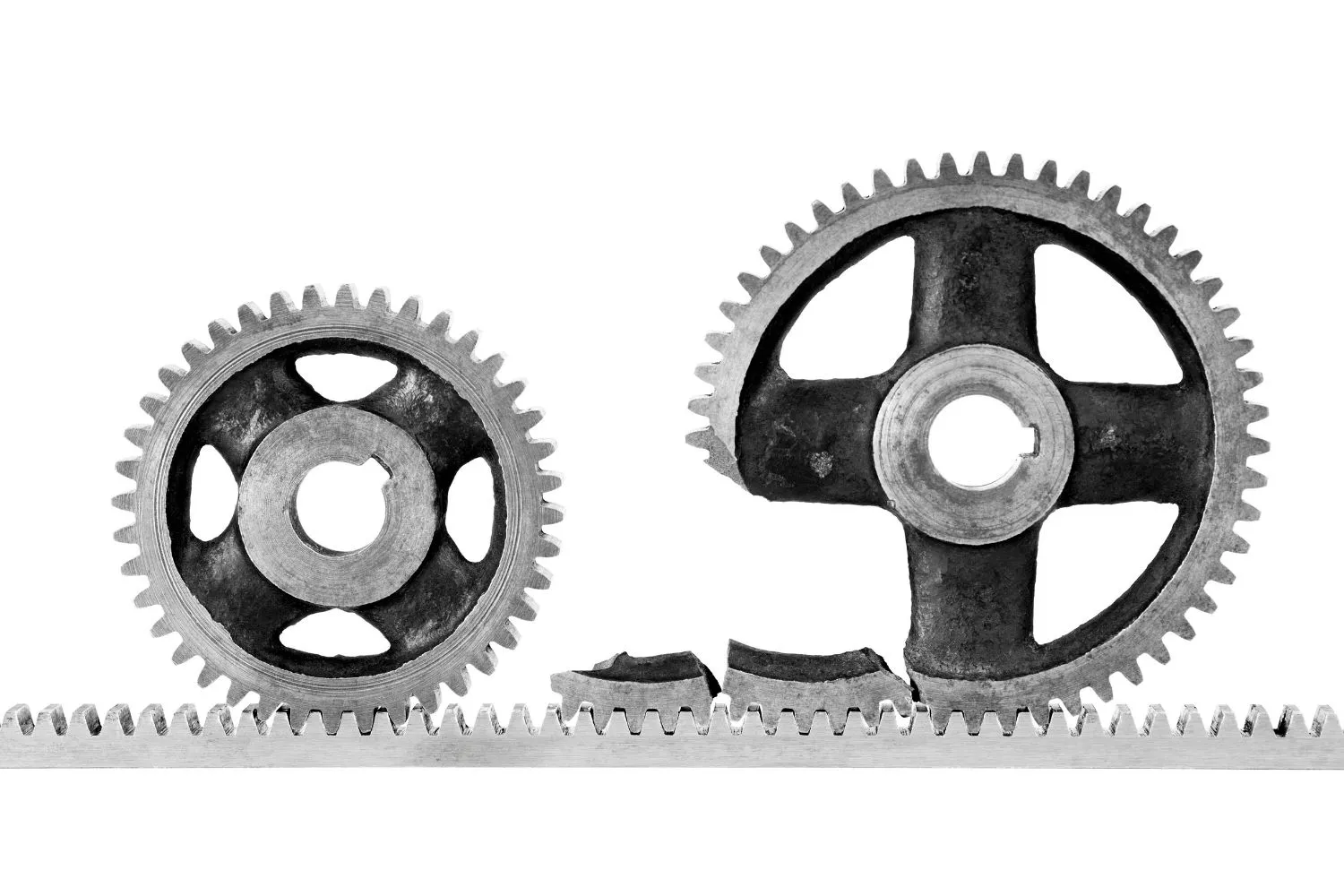
The installation and maintenance of rack and pinion gears are vital to ensuring the efficient and long-lasting operation of this mechanism. The rack and pinion gear is a critical component used in mechanical systems to convert rotary motion into linear motion, or vice versa. Correct installation and regular maintenance ensure these systems run smoothly and help prevent potential failures.
Installation of the rack and pinion gear begins with correctly selecting the rack and pinion to be used in the system. This selection depends on the requirements of the application, taking into account factors such as gear ratio, load capacity and operating environment. During installation, the alignment of the rack and pinion is of great importance. When the distance and alignment between these components are set correctly, the system runs more smoothly and gear wear is minimised.
After installation, regular maintenance of the rack and pinion gear is critical to preserving system performance and extending its service life. The maintenance routine may vary depending on the type of material used in the system and the operating conditions. In general, however, the rack and pinion need to be lubricated and cleaned regularly. Lubrication reduces friction, prevents wear and allows the system to run more quietly. Cleaning helps remove dirt and foreign matter that has built up between the gears, reducing the risk of potential damage.
In rack and pinion gear systems, signs of wear and tear should be checked regularly. Tooth wear, cracks or other types of damage can adversely affect system performance and lead to premature failures. When such issues are detected, the relevant components may need to be repaired or replaced.
Finally, any change or irregularity that could affect the performance of rack and pinion gear systems should be investigated immediately and corrected if necessary. This helps ensure system efficiency and safety, as well as preventing unexpected failures and costs.
The installation and maintenance of rack gears require expertise and care, as these processes are critical to ensuring that this mechanism operates effectively and reliably. Therefore, installation and maintenance work should generally be carried out by professionals experienced in this field.
How to Select a Rack Gear?
Rack gear selection is a critical process for the success of the application and the efficiency of the system. Choosing the right rack gear directly affects the performance, durability and service life of mechanical systems. There are several important factors to consider when selecting a rack gear:
Application Requirements
Load Capacity and Force: The maximum load the system must carry and the force to be applied affect the size and material type of the rack gear to be selected.
Speed and Motion: The operating speed of the system and the required type of motion (linear or rotary) determine the choice of gear type and tooth ratio.
Precision and Positioning: Requirements for precise control and positioning may call for the selection of more precise gears, such as helical gears.
Operating Environment
Temperature and Humidity: The temperature and humidity conditions of the application environment can affect material selection and the use of protective coatings.
Contamination and Dust: The cleanliness of the working environment determines gear protection and maintenance needs. Dirty and dusty environments may require gear protection and frequent maintenance.
Material Selection
Durability: The selected material must have high load capacity and wear resistance.
Corrosion Resistance: Corrosion-resistant materials such as stainless steel should be preferred, especially in environments that may be humid or exposed to chemicals.
Weight: If the application has weight restrictions, lightweight materials such as aluminium may be suitable.
Gear Type and Tooth Ratio
Spur or Helical Gear: While spur gears generally offer simpler and more economical solutions, helical gears provide quieter operation and better performance at high speeds.
Tooth Ratio: The tooth ratio is important for achieving the desired output speed and force. It should be adjusted according to the speed and torque required by the application.
Manufacturer and Supplier Selection
Quality Standards: Quality certificates provided by the manufacturer and compliance with standards increase product reliability.
Technical Support and Service: The technical support and customer service of the selected supplier can be helpful, particularly with installation and maintenance.
Rack gear selection should be made by carefully evaluating each of these factors. The right choice can optimise system performance while also reducing costs in the long run.
You can read our article to learn everything you would like to know about pinion gears: What Is a Pinion Gear? Areas of Use for Pinion Gears