
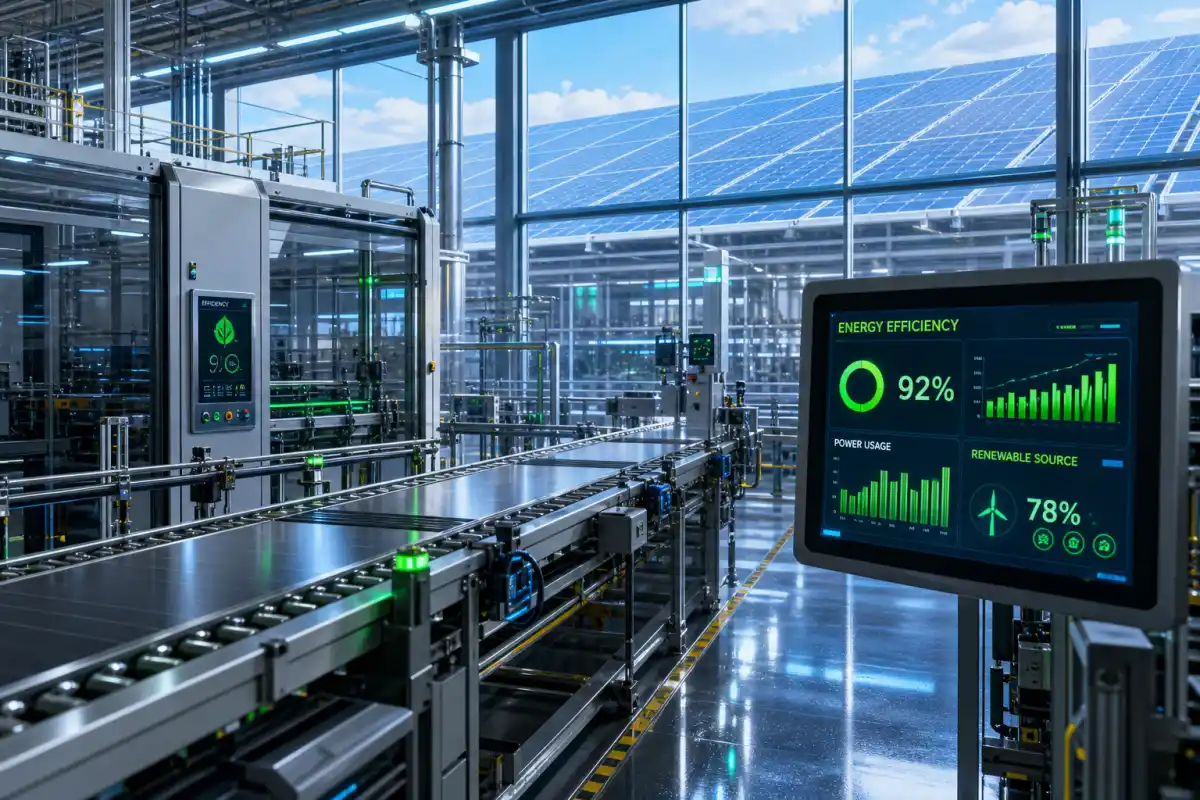
A significant portion of energy consumption in industrial production facilities is generated by conveyor belt systems . Forming the backbone of material handling operations in modern factories, these systems hold the potential for energy savings of between 25% and 40% with proper optimisation. Conveyor belt energy efficiency not only cuts costs — by shrinking the carbon footprint, it also makes a direct contribution to sustainable production goals.
In this guide, we will look in detail at strategies to improve energy efficiency in conveyor belt systems, low-friction belt technologies, smart control systems and sustainable production practices.
How Does Energy Consumption Occur in Conveyor Belt Systems?
Energy consumption in conveyor belt systems arises from the sum of several main components. It is not possible to improve efficiency without understanding these components. The main sources of energy consumption are as follows:
1. Friction Losses
The friction generated during the movement of conveyor belts is the largest source of energy consumption. Friction between the belt and the pulleys, sliding-bed friction beneath the belt, and mechanical friction in the idler bearings account for 50% to 60% of total energy input. In particular, conveyor belt systems the material selection used in the design directly determines this friction ratio.
2. Load-Carrying Resistance
The weight of the material being conveyed, the belt width and the angle of inclination affect the carrying resistance and, consequently, energy consumption. Since inclined conveyors require additional power to counteract the effect of gravity, straight-line layouts are more energy-efficient.
3. Idle Running Losses
Even when conveyor systems operate below capacity, fixed energy consumption continues. Even if a conveyor belt system carries a load at only 30% of its capacity, energy consumption can still occur at 70-80% of full-capacity levels. This can be optimised through smart speed control.
4. Auxiliary Equipment Consumption
Auxiliary equipment such as cleaning systems, belt scrapers, magnetic separators and dust extraction systems also contributes between 5% and 15% to total energy consumption.
Criteria for Selecting Energy-Efficient Conveyor Belts
The journey to conveyor belt energy efficiency begins with selecting the right belt. Choosing low-friction, energy-saving alternatives instead of conventional conveyor belts can lead to significant reductions in operational costs.
Low-Friction Belt Technologies
Modern belt manufacturers have developed special rubber compounds that reduce the coefficient of friction. These belts, Habasit energy efficiency solutions provide energy savings of up to 25% with special coatings such as the TransEvo series it offers. The main advantages of low-friction belts are:
- Low rolling resistance at the pulley contact surface
- The ability to achieve the same capacity with a smaller motor power
- Longer belt life through reduced heat build-up
- Reduced mechanical stress through lower tension requirements
The Effect of Belt Construction Material
Rubber compound, belt thickness and ply count directly affect energy efficiency. Thin-ply belts (30-40% energy savings), plain-woven belts and thermoplastic belts consume noticeably less energy than conventional thick steel-cord belts. Points to consider when selecting a belt:
- Ply structure: Fewer plies mean lower mass and less friction
- Rubber hardness: A softer bottom cover dissipates less deformation energy at the pulley contact
- Textile type: Polyester-nylon blends are lighter than steel cords
- Belt weight: A 1 kg reduction per square metre saves thousands of kWh a year on kilometre-long conveyors
Smart Conveyor Control Systems and Automation
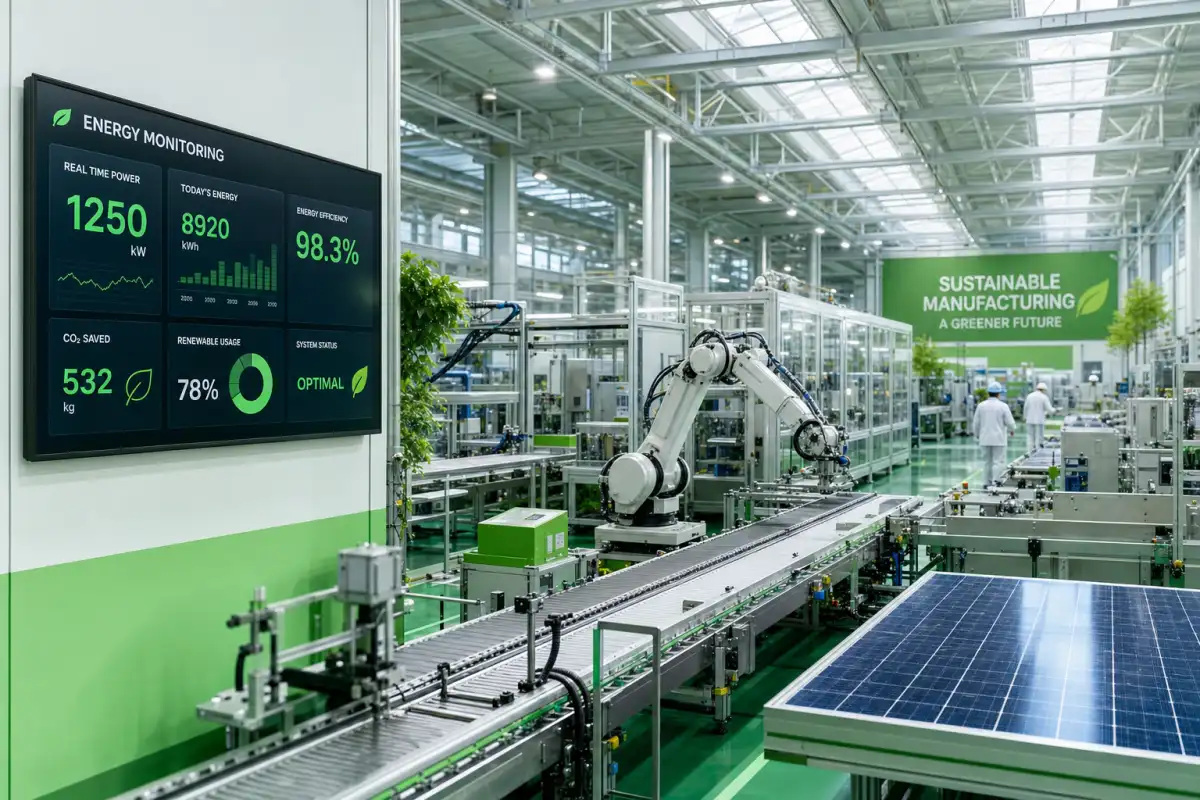
The biggest step in the technological shift towards energy efficiency has come with smart control systems. Instead of traditional fixed-speed conveyors, variable frequency drives (VFDs) that adjust speed according to load, together with IoT-based monitoring systems, deliver significant savings.
Variable Frequency Drive (VFD) Applications
VFDs automatically adjust the conveyor motor's speed according to the load. Belt speed is kept at maximum when operating at full capacity, while it is reduced during low-load periods. As a result:
- Idle-running energy consumption is reduced by 30-50%
- Motor life is extended through soft starting
- Mechanical shock loads are minimised
- Belt and idler life is extended
IoT-Based Condition Monitoring
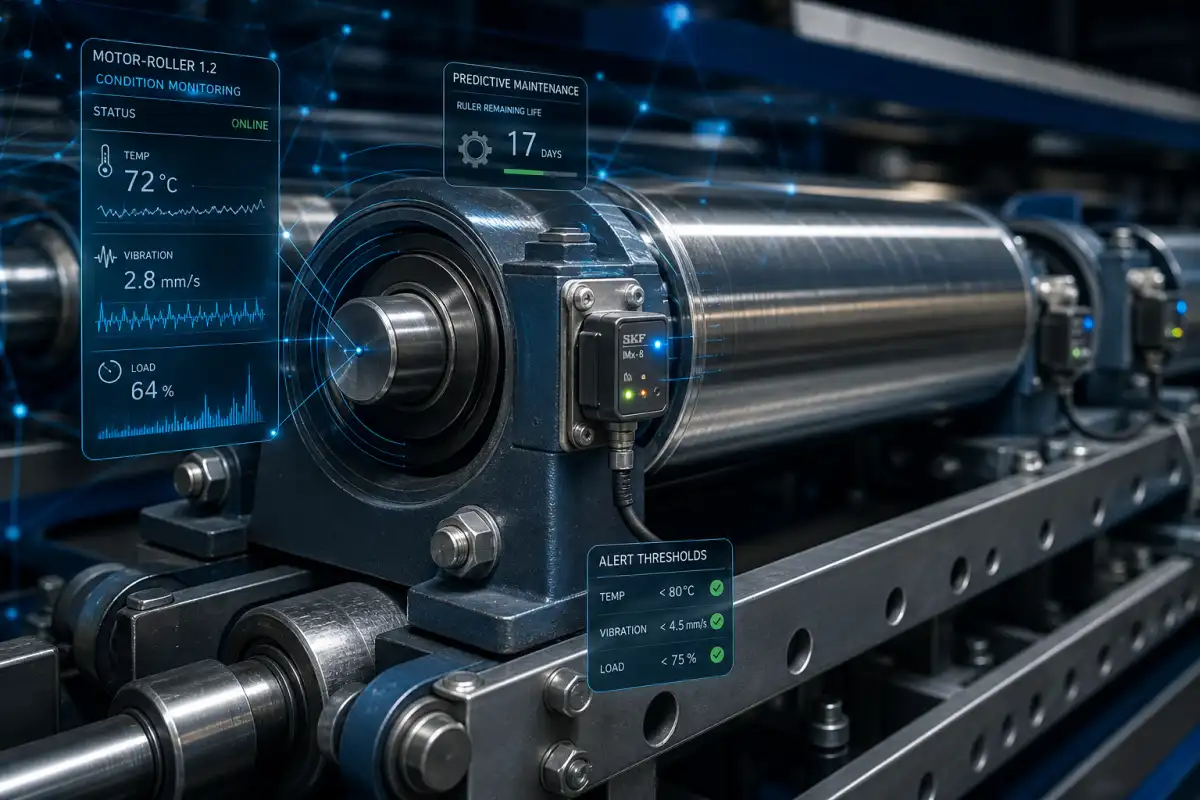
Conveyor systems fitted with smart sensors transmit real-time energy consumption data to central control. This data enables early detection of abnormal consumption increases, optimises maintenance planning, and works in an integrated way with industrial chain lubrication and maintenance processes. The data provided by IoT sensors includes:
- Instantaneous power consumption and load factor monitoring
- Fault prediction through vibration analysis
- Temperature anomaly detection
- Belt tension status monitoring
- Energy efficiency reporting dashboards
Energy Efficiency Strategies in Conveyor Design
Conveyor belt energy efficiency is not limited to belt selection alone. System design, route planning and mechanical configuration also directly affect energy consumption.
Optimum Route and Incline Planning
Conveyor route design forms the basis of energy efficiency. On inclined conveyors, every 1-degree increase in incline raises energy consumption by approximately 3-5%. For this reason:
- Flat or gently inclined routes should be preferred where possible
- On unavoidably steep sections, regenerative braking can be used with downhill conveyors
- The number of curves should be minimised; each curve creates a 2-4% energy loss
- For short-distance transport, a single long line is more efficient than multiple conveyors
Idler Selection and Spacing
Idler (roller) selection and spacing interval play a critical role in conveyor belt energy efficiency. Idlers with low-friction bearings deliver 15-20% energy savings compared to standard bearing models. When optimising idler spacing:
- Carrying idler spacing should be set according to load capacity
- Too tight an idler arrangement increases belt resistance, while too sparse an arrangement leads to belt sagging
- Return idler spacing should be 2-3 times the carrying idler spacing
- Garland idler systems offer lower rolling resistance than flat idlers
Motor and Gearbox Sizing
Oversized motors run at a low load factor, causing energy waste. For correct motor selection:
- Motor power should be calculated based on actual load conditions; the safety factor should not exceed 15-20%
- High-efficiency IE3 or IE4 class motors should be preferred
- Gearbox efficiency should exceed 95%; helical and bevel gearboxes are more efficient
- Motor losses should be minimised even during standstill operation without servo assistance
Sustainable Production and Conveyor Systems
Sustainability has become one of the most important parameters shaping the future of industrial production. Conveyor belt energy efficiency is a strategic issue not only for cost savings but also for environmental responsibility and regulatory compliance.
Reducing the Carbon Footprint
A significant share of industrial facilities' carbon emissions stems from electricity consumption. Conveyor systems account for 10-25% of total energy consumption. Reducing this share through energy-efficient conveyor operation directly contributes to companies' carbon footprint targets. In Türkiye in particular, energy efficiency investments are being incentivised under the Industrial Greening Support Programme coming into force in 2026.
Recycling and End-of-Life Management
The end-of-life management of conveyor belts should also be assessed from a sustainability perspective. Traditional belts contain materials that are difficult to recycle due to their PVC and rubber composition. However, modern manufacturers:
- Have raised the recycling rate above 90% with TPR (Thermoplastic Elastomer) belts
- Can process used belts as fuel at energy recovery facilities
- Prevent complete belt waste through modular belt systems that allow damaged sections to be replaced
- "Take-back" programmes are becoming widespread among belt manufacturers
Renewable Energy Integration
Powering conveyor systems with renewable energy is the strongest step towards sustainability targets. Conveyor motors connected directly to solar panels are particularly applicable in open-pit mining and large warehouse areas. Regenerative braking systems also make it possible to recover potential energy on inclined conveyors.
The Impact of Maintenance and Operation on Energy Efficiency
Just as much as correct design and component selection, operational maintenance also makes energy efficiency sustainable. Maintenance shortfalls can increase energy consumption by 15-30% over time.
Periodic Maintenance Programme
Regular maintenance is essential to preserve conveyor belt energy efficiency. Chain and gear power transmission efficiency as in the system, periodic maintenance is also critically important in conveyor systems:
- Idler bearings: Worn or damaged bearings can increase friction by 300%; they should be inspected every 6 months
- Belt tension: Excessive tension increases energy consumption, while low tension triggers slippage and energy waste
- Cleaning systems: Belt scrapers and cleaning blades should be inspected regularly
- Misalignment: Belt mistracking shortens the life of both the belt and the idlers, and increases energy consumption
Smart Maintenance and Predictive Analysis
Instead of traditional time-based maintenance, a predictive maintenance approach based on sensor data preserves energy efficiency while also reducing maintenance costs. Vibration analysis, thermal imaging and acoustic monitoring systems make it possible to detect faults before they occur. Energies journal's research on conveyor energy savings according to which, energy efficiency loss stays below 5% at facilities that apply predictive maintenance, while this rate can rise to 20% at facilities that carry out reactive maintenance.
ROI Analysis of Energy Efficiency Investments
The payback period for conveyor belt energy efficiency investments ranges from 6 months to 3 years, depending on the type of application. Key investment areas and expected returns:
Quick Payback (6-12 Months)
- VFD installation: 30-50% energy savings on conveyors with variable loads
- Low-friction belt conversion: Replacing existing belts with energy-saving models
- Idler upgrade: Installation of idlers with low-friction bearings
Medium-Term Investment (1-2 Years)
- IoT monitoring system: Real-time energy tracking and optimisation
- Automatic tensioning system: Keeping belt tension continuously at the optimum level
- Energy-efficient motor replacement: Switching to IE4-class motors
Long-Term Strategic Investment (2-3 Years)
- Full conveyor system renewal: New-generation low-friction belt and idler system
- Solar energy integration: Photovoltaic power supply for open-area conveyors
- Regenerative braking: Recovery of potential energy on inclined conveyors
Conveyor Energy Efficiency Trends in Türkiye
Conveyor optimisation is increasingly gaining priority in the energy-intensive sectors of Türkiye's industry. While energy costs account for 25-40% of total production costs in the mining, cement, iron and steel, and food sectors, the share of conveyor systems in this cost ranges between 10-25%.
Regulation and Incentives
Under Turkey's energy efficiency legislation, industrial facilities can benefit from government incentives for projects that improve energy efficiency. The Ministry of Industry's energy efficiency support programmes also cover investments in conveyor system optimisation. In addition, ISO 50001 Energy Management System certification requirements are directing facilities to monitor and reduce their energy consumption.
The Ostim Example
In factories operating in the Ankara Ostim Industrial Zone, investment in conveyor belt energy efficiency has risen by 35% over the past three years. In particular, the switch to VFDs and low-friction belts by small and medium-sized enterprises stands out, with an average payback period of 14 months.
Conclusion and Evaluation
Conveyor belt energy efficiency sits at the intersection of sustainability and cost optimisation in industrial production. With low-friction belt technologies, smart control systems, VFD applications and IoT-based monitoring, it is possible to achieve 25-40% savings in the energy consumption of conveyor systems.
At Gurur Makina, we continue to offer energy-efficient solutions for industrial conveyor belt systems. Our expert team is on hand to improve your facilities' energy performance through the right belt selection, periodic maintenance and modernisation consultancy. Conveyor belt energy efficiency is not merely a cost item; it is a cornerstone of sustainable production.
buildingindustrial chainpower transmission